Overcoming the 3 Biggest Visual Challenges in Mechanical Watch Repair
For watch repair technicians and vintage timepiece restoration hobbyists, the workbench is a high-stakes environment. A single microscopic speck of dust, a dry jewel bearing, or a slightly bent hairspring can cause a luxury mechanical watch to lose time or stop running entirely.
Because modern timepieces utilize incredibly compact micro-mechanics, the absolute biggest hurdle in watchmaking is achieving proper visual clarity without sacrificing your physical comfort.
The Real Pain Points on the Watchmaker’s Workbench
When servicing a watch movement, you face three specific visual challenges that traditional tools like eye loupes fail to solve.
First, you need a wide view to see the entire movement layout while removing the watch case back or bridges. Second, you need mid-range magnification to closely inspect gear trains and oil levels inside individual jewels. Finally, you need extreme close-up magnification to check the microscopic pallet stones on the escapement fork.
Using a traditional jeweler’s eye loupe forces you to squint constantly, causing severe eye strain and headaches after an hour of work. Even worse, it requires you to bend your head directly over the movement, leaving virtually no physical clearance for your tweezers, oilers, and screwdrivers. One accidental bump of your head can slip your hand and permanently scratch a vintage dial.
How a Three-Lens Setup Solves the Watchmaker’s Dilemma
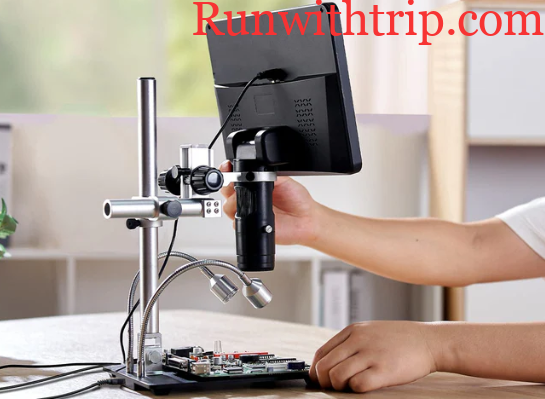
To eliminate these risks and improve your efficiency, you need a versatile optical system that offers multiple magnification levels along with a generous working distance. Upgrading your workbench to a dedicated 3-Lens Microscope addresses these exact professional needs.
A multi-lens configuration transforms your restoration workflow by offering tailored solutions for each stage of watch repair:
- Seamless Magnification Switching: You can instantly transition from a wide-angle lens for case disassembly to a high-power lens for hairspring adjustments without changing your physical setup.
- Massive Tool Clearance: Unlike eye loupes, a digital multi-lens system provides plenty of open vertical space between the lens and the watch movement, giving your hands complete freedom to manipulate delicate parts.
- Ergonomic Posture Protection: By projecting the crisp image onto a high-definition monitor, you can sit perfectly upright, keeping your hands steady and saving your neck from long-term injury.
Optimizing Your Timepiece Inspection Station
To achieve the best results during a watch overhaul, your magnification gear must be paired with excellent lighting and stability. A heavy, wobble-free metal base is mandatory to prevent any image shaking while you are handling microscopic screws. Furthermore, adjustable, shadow-free LED illumination ensures that you can see deep inside the watch mainplate to guarantee that every single component is flawlessly clean and lubricated.
Final Thoughts
Successful watch restoration requires an flawless view and absolute control over your tools. By upgrading your workstation to a versatile three-lens system, you gain the visual flexibility needed to diagnose complex mechanical issues, protect your posture, and execute micro-repairs with total confidence.