How to travel across the USA by train: routes, tickets, and sleeper tips for a cross-country trip
Quick answer: How to travel across the USA by train starts with choosing a coast-to-coast route, booking early, and deciding between a coach seat and a sleeper. A full crossing takes several days, so pack light, bring food and entertainment, plan stops in cities along the way, and treat delays as part of the journey rather than a surprise.
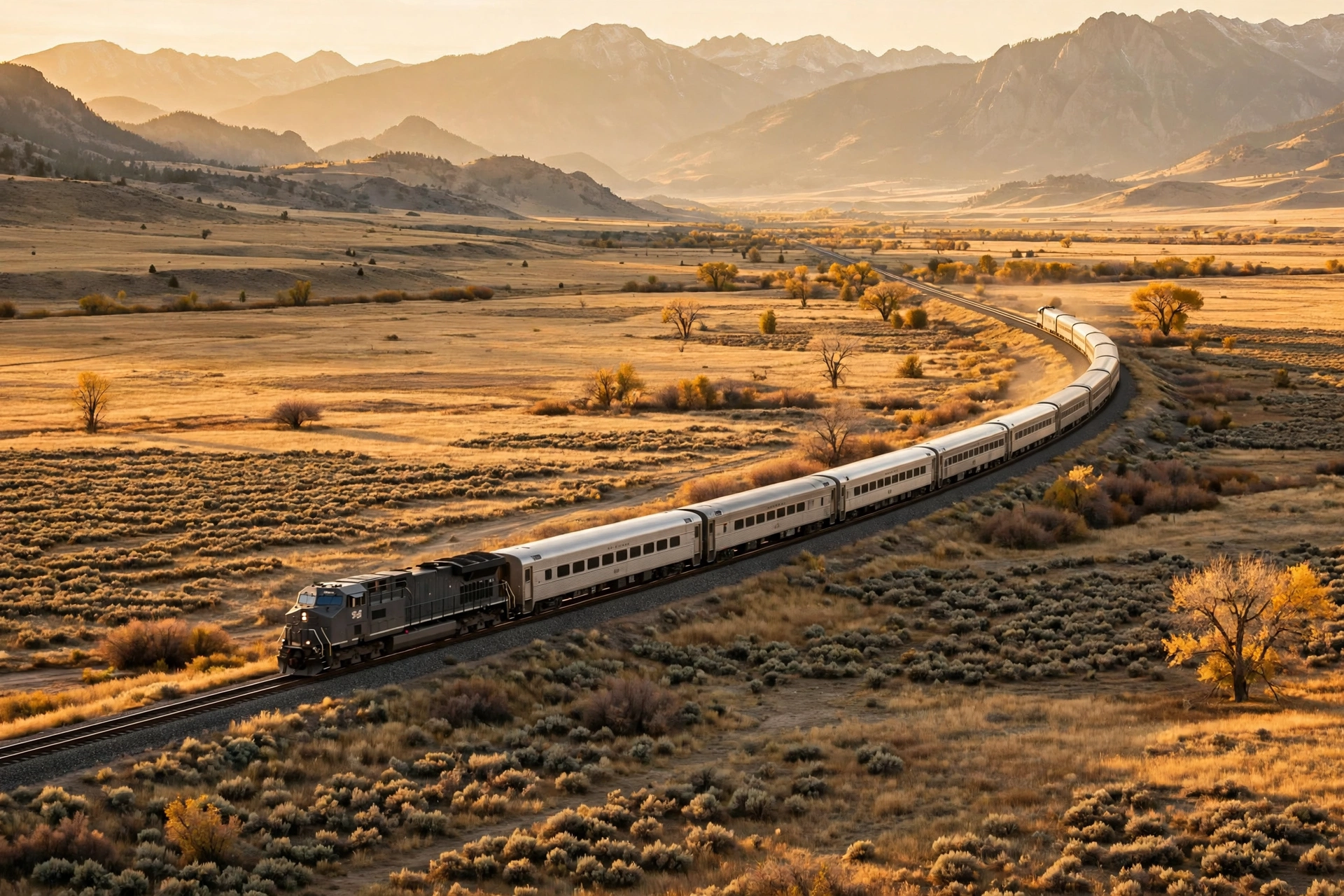
Crossing the United States by train is a completely different kind of trip from flying or driving. You watch the landscape change slowly outside a wide window — farmland giving way to desert, then mountains, then forests — while someone else does the driving. The trade-off is time: a coast-to-coast train journey takes days, not hours. This guide explains how to plan a cross-country rail trip, from choosing a route to packing, sleeping, and handling delays.
What is the best way to travel across the USA by train?
The best way to travel across the USA by train is to treat the train as the trip, not just the transport. The national passenger rail network connects major cities from coast to coast, with long-distance routes that run through some of the most scenic parts of the country.
Start by deciding what matters most. If scenery is the priority, choose routes known for mountain and desert views. If cities are the priority, choose a route with stops you want to explore, and build in one or two overnight stays. For a broader planning framework, the guide to trip planning ideas for stress-free travel covers how to build an itinerary around the way you like to travel.
Which cross-country train route should you choose?
There is no single best route across the USA by train — the right one depends on where you start, where you want to finish, and what you want to see. The most popular coast-to-coast combinations run through Chicago, because it is the main hub where eastern and western long-distance trains meet. From the East Coast, trains run west from New York, Boston, and Washington to Chicago, and from Chicago, several routes continue west to the Pacific.
The California Zephyr runs from Chicago to the San Francisco Bay Area, crossing the Rocky Mountains and the Sierra Nevada — the classic choice for mountain scenery. The Southwest Chief runs from Chicago to Los Angeles through the desert Southwest. The Empire Builder runs from Chicago to Seattle and Portland, crossing the northern plains and the mountains of Montana and Washington. In the east, the Lake Shore Limited connects New York and Boston with Chicago, and the Crescent runs between New York and New Orleans.
How far in advance should you book train tickets?
Book as early as you can, especially for sleeper cars and for travel during school holidays, summer, and the weeks around major public holidays. Long-distance trains have a limited number of seats and an even smaller number of sleeping rooms, and the most popular departures sell out weeks or even months ahead.
Fares generally rise as the cheapest tickets sell out, so booking early is one of the simplest ways to keep a rail trip affordable. If you are watching your overall budget, the guide to budget travel tips for expensive cities that USA travelers can use has practical ideas for stretching a travel budget in the big cities where trains arrive and depart.
Should you book a coach seat or a sleeper car?
This is the biggest decision on a cross-country train trip, and it shapes the whole experience. A coach seat is the budget option: a wide, reclining seat with a footrest, more legroom than an economy airline seat, and a large window. On a multi-day trip you will sleep in your seat, which some people manage easily and others find tiring. A sleeper car gives you a private room with a bed, privacy, and access to a shower on many routes, plus meals included on most long-distance services. It costs considerably more than coach, but it turns a long journey into something comfortable.
The right choice depends on your budget, your tolerance for sleeping upright, and how long you will be on the train. For a single overnight leg, many travelers are happy in coach. For two or three nights in a row, a sleeper makes a real difference to how rested you feel. The advice in the guide on how to ride comfortably on long highway journeys applies to trains too — rest, movement, and good preparation make a long day much easier.
Which seat or sleeper option is right for you?
Different options suit different travelers and budgets. This table compares the main choices on a long-distance train.
| Option | Best for | Privacy | Sleeping comfort | Meals included |
|---|---|---|---|---|
| Coach seat | Budget travelers, short overnight legs | Low, open car | Fair, reclining seat | No, cafe and dining car available |
| Roomette | Solo travelers or couples, one to two nights | High, private room | Good, bed converts from seats | Usually yes on long-distance routes |
| Bedroom | Couples or families wanting space | High, larger private room | Very good, wider bed and more room | Usually yes on long-distance routes |
| Accessible bedroom | Travelers needing step-free access and space | High, private room | Good, designed for easy access | Usually yes on long-distance routes |
| Family bedroom | Families with children | High, private room | Good, sleeps several people | Usually yes on long-distance routes |
For most first-time cross-country travelers, the choice comes down to coach versus a roomette. Coach keeps the trip affordable and still gives you the views and the freedom to move around. A roomette gives you a door you can close, a bed you can lie flat in, and meals included.
What should you expect at stations and during boarding?
Arrive at the station early — at least 45 minutes before departure for a long-distance train, and longer at a large station like Chicago Union Station, where platforms and waiting areas are spread out. Long-distance trains usually start boarding 20 to 30 minutes before departure, and the boarding call is announced over the station speakers and shown on the departure boards.
Keep your booking reference handy. You usually do not need a printed ticket — showing the booking confirmation or QR code on your phone is enough — but keep it open and ready before you reach the gate, because station Wi-Fi can be slow. A conductor or station staff member will check your ticket as you board and direct you to the right car: coach cars, sleeper cars, and the dining car are separate, so check the car number on your ticket against the signs on the platform.
Once aboard, find your seat or room, store your main bag in the luggage area, and keep your day bag with you. If you are unsure where to go, ask a conductor — they manage seating and sleeping cars, announce stops, and can tell you when your station is coming up. Settle in before the train leaves: stowing bags and finding your seat is much harder once the train is moving.
What should you pack for a multi-day train trip?
Packing for a train is easier than packing for a flight, because luggage limits are generally more generous and there is no liquid restriction of the kind airlines apply. That does not mean you should bring everything. You will carry your bags through stations, lift them onto the train, and store them in limited space, so a bag you can manage on your own is worth more than a bag with everything in it.
Pack one main bag and one small day bag. The main bag holds your clothes and toiletries and goes in the luggage area. The day bag stays with you at your seat and holds everything you need during the day: water bottle, snacks, phone charger and power bank, headphones, a book or tablet, a light layer for air-conditioned cars, basic toiletries, any medication, and your travel documents. Dress in layers, because temperatures vary between cars and between day and night, and wear comfortable shoes you can slip off easily at your seat.
How do you plan stops and overnight breaks along the way?
One of the best things about traveling across the USA by train is that you can break the journey. A stopover — getting off in a city for a night or two and catching a later train — turns a long ride into a proper trip, with a real bed and a shower between long legs. Most cross-country routes pass through cities worth a stop: Chicago, Denver, Albuquerque, and Salt Lake City, depending on your route.
Plan stops around the train schedule, not the other way around. Check how often your route runs: a daily train makes a stopover easy, while a train that runs only a few times a week means waiting several days for the next departure. Book accommodation near the station or in the city center, so you are not spending your short stay in a taxi. The guide on how to choose the right accommodation for extended stays covers what to look for in a place to stay when you arrive by train.
How do you handle delays and changes to your plan?
Delays are a normal part of long-distance train travel in the United States, because passenger trains often share tracks with freight trains and can wait for freight traffic to clear. A train that is an hour or two late is not unusual on a multi-day route, and longer delays happen. The key is to plan for it: do not book a tight connection, a same-day flight, or a non-refundable hotel check-in that depends on an exact arrival time.
Build buffer into every connection. If you are changing trains, allow several hours between arrival and departure, and consider an overnight stay in the hub city instead of a same-day connection. Keep snacks, water, and entertainment in your day bag so a delay is an inconvenience, not a crisis, and keep your phone charged. The guide to travel wellness and maintaining health and energy across time zones covers sleep, food, and movement on long journeys.
Is train travel across the USA better than flying or driving?
It depends on what you want from the trip. Flying is faster — a cross-country flight takes hours, while the train takes days — and if your goal is simply to get from one coast to the other as quickly as possible, the plane wins. The guide to the best airlines for long flights covers how to make a long flight comfortable if speed is your priority. Driving gives you total freedom, but you are driving for hours every day, paying for fuel and accommodation, and navigating unfamiliar roads.
The train sits between the two. It is slower than flying but far more relaxing: you can walk around, eat a proper meal, read, sleep in a bed, and watch the country go by without doing any of the work. It is less flexible than driving, because you follow a fixed route and timetable, but you arrive rested instead of exhausted from the road. For travelers who enjoy slow travel, who want to see the landscape, or who simply dislike flying, the train is often the most enjoyable option — not the fastest, but the one you remember best.
Frequently asked questions
Can you travel across the USA by train without a car?
Yes. Long-distance trains connect the East Coast, Chicago, and the West Coast, and most major cities have public transport, taxis, or rideshare services at the station. Plan your arrival and onward transport in advance, especially in smaller towns where options are limited.
How long does it take to travel across the USA by train?
A full coast-to-coast crossing takes several days, including at least one change of train, usually in Chicago. The exact time depends on your route, your departure day, and any stopovers you add, so check the full timetable before you book.
Do you need to book a sleeper car for a cross-country train trip?
No, a sleeper is not required. Many travelers cross the country in a coach seat, which is wide and reclines. A sleeper is more comfortable for two or more nights, gives you privacy and a bed, and usually includes meals, so it is worth considering if your budget allows.
Is food included on long-distance trains in the USA?
Meals in the dining car are usually included for sleeper passengers on long-distance routes, while coach passengers can buy meals or use the cafe car. Bring snacks of your own as well, because the cafe car has limited hours and a limited menu.
Can you get off the train and reboard later on the same ticket?
Generally no — a ticket is for a specific train on a specific day. If you want to stop in a city for a night or more, book your journey in separate legs, with one ticket to the stopover city and another ticket onward. Check the booking terms when you buy.
What is the best time of year to travel across the USA by train?
There is no single best season. Spring and autumn usually bring milder weather and fewer crowds, summer is the busiest season, and winter can bring snow scenery on mountain routes along with a higher chance of weather-related delays.
Traveling across the USA by train rewards travelers who slow down. Choose a route that excites you, book early, pack a good day bag, and leave room for delays and discoveries along the way.