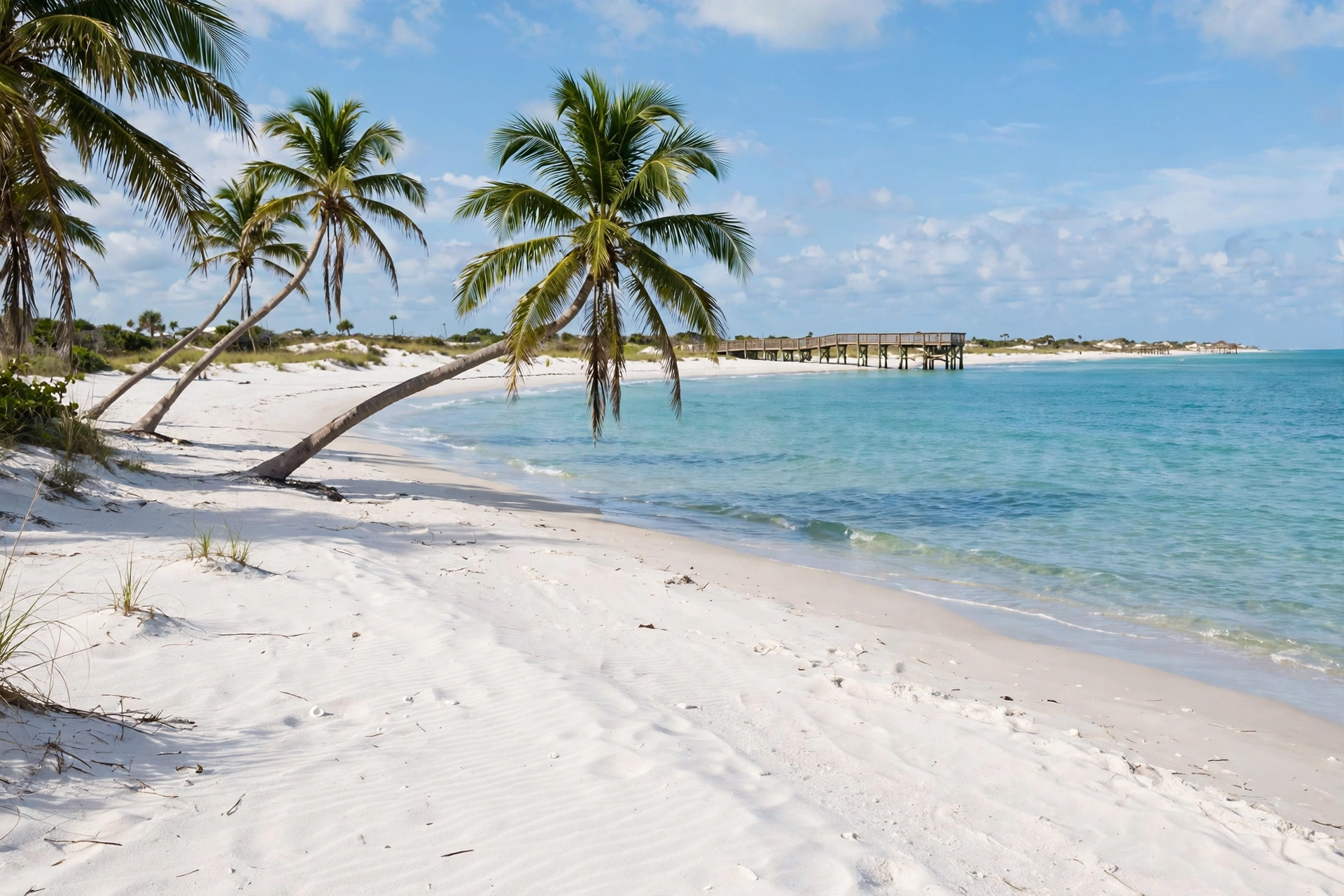
Best beaches in Florida: where to go for white sand, clear water, and easy days by the sea
Quick answer: The best beaches in Florida depend on the day you want. The Gulf Coast has calm, warm water and soft white sand at Siesta Key, Clearwater Beach, and Destin. The Atlantic side has bigger surf and lively beach towns at Daytona Beach, Cocoa Beach, and Miami Beach. The Florida Keys are best for snorkeling and slow, shallow-water days.
Florida has more than 800 miles of coastline, and no two stretches feel the same. On the Gulf side, the water is calmer and warmer, the sand is fine and white, and the sun sets over the sea. On the Atlantic side, the waves are bigger and the sun rises over the water. In the Keys, the water is clear and shallow and the pace slows down. This guide matches a beach to the trip you want.
Which Florida beach should you choose first?
For a first visit, start on the Gulf Coast. Siesta Key, near Sarasota, is known for fine, powdery white sand that stays cool underfoot, a wide beach, and a gentle slope into the water — a classic easy beach day for families. Clearwater Beach suits travelers who want things to do within walking distance: wide white sand, calm water, and a promenade with restaurants and kayak rentals.
On the Atlantic side, Miami Beach gives you a beach and a city in the same day, with wide sand, a long boardwalk, and Art Deco streets behind it. Daytona Beach is different: the sand is hard-packed enough that cars are allowed on parts of it in marked driving zones. In the Panhandle, Destin and Panama City Beach are worth the drive — see the guide to coastal escapes from Panama City Beach to Gulf Shores.
What makes the Gulf Coast beaches different from the Atlantic side?
The biggest difference is the water. Gulf Coast beaches face west into the Gulf of Mexico, where the water is sheltered and usually much calmer than the open Atlantic. Waves are small, the water warms up earlier in the year, and the shoreline slopes gently, so you can wade out a long way before it gets deep. That is why these beaches suit families and swimmers who prefer gentle water. Gulf sand, especially around Destin, is fine white quartz that stays cooler underfoot.
Atlantic beaches face the open ocean, so the waves are bigger and the surf is more reliable — Cocoa Beach and Daytona Beach are known for surfing. Atlantic sand tends to be coarser and more golden, and the beaches are often wider at low tide. Gulf beach towns tend to be smaller and quieter, while Atlantic towns are livelier, with boardwalks and more nightlife.
Which beaches are best for families with kids?
The best family beaches share the same traits: gentle water, soft sand, lifeguards on duty, restrooms nearby, and shade. Clearwater Beach checks all of those boxes, and the calm water near the shore suits younger children. Siesta Key is another strong family choice: the beach is so wide that children have room to play, and the water stays ankle-deep for a long way out. St. Augustine Beach pairs with the historic town a short drive away, so you can split the day between sand and old streets.
In the Panhandle, Panama City Beach suits families because the shoreline is so long you can find a quieter stretch away from the busiest access points, and Pensacola Beach has clear water, white sand, and a relaxed feel. Bring shade, twice as much water as you think you need, and snacks that will not melt. Renting chairs and an umbrella also helps — see the guide to beach chair rentals for effortless coastal days.
Where can you find the clearest water in Florida?
The clearest water is usually in the Keys and the Panhandle. In the Florida Keys, the water is shallow and protected by the reef offshore, which keeps it calm and clear. Bahia Honda State Park, in the Lower Keys, has one of the best swimming beaches in the Keys, with clear water and soft sand. Fort Zachary Taylor in Key West also has clear water for swimming and snorkeling.
In the Panhandle, Destin is known for emerald-colored water on calm days, when the white sand makes the shallow water look almost turquoise. The same is true of Pensacola Beach and the Gulf Islands National Seashore. On the Atlantic side, South Florida water is clearest when the wind blows from the land toward the sea. Early morning is the clearest time of day anywhere, before the wind picks up. Clarity changes day to day, so check the wind forecast and arrive early.
Which beaches are best for swimming and snorkeling?
For swimming, the Gulf Coast is the easiest place to start. The water is warm for much of the year, the waves are small, and the bottom slopes gently. Siesta Key, Clearwater Beach, and Anna Maria Island are all good for a straightforward swim, and the water at Fort De Soto Park near St. Petersburg is calm and shallow.
For snorkeling, the Florida Keys are the clear winner. The reef offshore supports a wide range of fish, coral, and sea grass. John Pennekamp Coral Reef State Park in Key Largo is one of the best places to start, with boat trips to the reef, and Bahia Honda has good snorkeling close to shore. On the Atlantic side, Phil Foster Park in Riviera Beach and Red Reef Park in Boca Raton have reefs close to shore that are best on calm days. For a guided day on the water in the Keys, see what is included on a private backcountry fishing charter in Islamorada.
What should you pack for a Florida beach day?
The sun is the main thing to plan for: Florida sits far enough south that the sun is strong even in winter, and the reflection off the sand and water makes it stronger. Bring reef-safe sunscreen and reapply it often, especially after swimming. A wide-brimmed hat, sunglasses with a strap, and a long-sleeve swim shirt protect you far better than sunscreen alone.
Bring more water than you think you need. Pack snacks that hold up in the heat: fruit, sandwiches, crackers, and nuts travel better than chocolate or anything that melts. Bring a towel or a lightweight blanket, a beach chair, and a shade umbrella or a pop-up tent. A dry bag protects your phone, keys, and wallet, and a trash bag lets you carry rubbish out. Pack a mask and snorkel, and water shoes for shelly beaches such as Sanibel Island.
How do you stay safe in the sun and water at Florida beaches?
Start with the sun: apply sunscreen before you reach the beach, reapply every couple of hours and after swimming, and seek shade during the middle of the day, when the sun is strongest. Take shade seriously even if the sky looks cloudy.
In the water, swim near a lifeguard whenever you can, and watch the flags at the beach entrance. A purple flag means marine life such as jellyfish may be present. A red flag means the surf is rough and swimming is discouraged, and a double red flag means the water is closed to swimmers. In a rip current, stay calm, do not swim straight back to shore — swim parallel to the beach until you are out of it, then swim in. If you hear thunder or see lightning, leave the beach at once and wait indoors or in a car until at least 30 minutes after the last thunder.
When is the best time of year to visit Florida beaches?
Late spring, from March through May, is often the best balance: the water is warming up, the air is warm but not at its hottest, and the humidity is lower than in summer. Avoid spring break weeks for quieter sand. Summer has the warmest water and the longest days, and it is the most popular time for family trips — but also the hottest and most humid, with afternoon thunderstorms, so plan beach time for the morning.
Fall, from September through November, is a best-kept secret of Florida beach travel. The water stays warm well into October, the crowds thin out after the summer holidays, and the weather is often sunny with lower humidity. Early fall is peak hurricane season, so check the forecast. Winter, from December through February, is the dry season, with mild air, low humidity, and sunny days. The water is cooler, but still swimmable in South Florida and the Keys, where winter is the busiest season — book early.
How can you avoid the crowds at popular Florida beaches?
Go early. Most Florida beaches are quietest before 10 in the morning, and the difference between 8 a.m. and noon can be dramatic. Arriving early also means easier parking, a better spot near the water, and calmer water before the afternoon wind picks up. A sunrise walk is often the best part of the day.
Weekdays are much quieter than weekends at almost every Florida beach. Plan beach days for Monday through Thursday when you can. School holidays, spring break, and public holiday weeks are the busiest times of all. A less famous beach is the other reliable trick: Fort De Soto Park, Honeymoon Island, and the Gulf Islands National Seashore are quieter than the big-name beaches. Parking is often the real bottleneck, so check for overflow parking or a shuttle — and in Miami, the guide to exclusive transportation in Miami covers getting around without worrying about parking.
Which Florida beaches are best for a quieter, slower trip?
If you want a slow, unhurried beach day, look for places where the beach is the main attraction. Sanibel Island, on the Gulf Coast, has a low-key, natural feel, with wildlife refuges, bike paths, and beaches known for shelling rather than crowds and nightlife. The best activity is often a long walk at low tide looking for shells. Anna Maria Island, near Bradenton, is similar: a small barrier island with wide, quiet beaches and a free trolley.
In the Keys, Bahia Honda State Park offers a quieter beach experience than Key West, with natural sand, clear water, and plenty of space — arrive early, because the car park fills up on weekends. On the Atlantic side, Amelia Island, near the Georgia border, has wide, quiet beaches and a historic downtown. Vero Beach is another quiet choice. For a quiet trip, the accommodation matters as much as the beach: the guide on how to choose the right accommodation for extended stays covers what to look for in a longer stay.
How do the best beaches in Florida compare?
| Beach | Coast | Water | Best for | Crowds |
|---|---|---|---|---|
| Siesta Key | Gulf | Calm, warm | Families, soft sand, sunsets | Busy on weekends |
| Clearwater Beach | Gulf | Calm, warm | First-timers, activities nearby | Busy in season |
| Destin | Gulf | Calm, emerald on calm days | Clear water, white sand | Busy in summer |
| Sanibel Island | Gulf | Calm, shallow | Shelling, quiet days | Moderate |
| Miami Beach (South Beach) | Atlantic | Moderate surf | City and beach in one day | Very busy |
| Daytona Beach | Atlantic | Moderate surf | Long walks, surfing | Busy on weekends |
| Amelia Island | Atlantic | Moderate surf | Quiet days, historic town | Quiet |
| Key West (Fort Zachary Taylor) | Keys | Clear, calm | Snorkeling, swimming | Moderate |
| Bahia Honda State Park | Keys | Clear, calm | Swimming, snorkeling | Busy on weekends |
Frequently asked questions
What is the best beach in Florida for first-time visitors?
Siesta Key and Clearwater Beach are the best first stops, with soft white sand, calm warm water, and facilities nearby. For a beach and a city in one trip, Miami Beach is the best Atlantic-side choice.
Which Florida beach has the whitest sand?
Siesta Key and Destin are known for the whitest sand in Florida. Siesta Key’s sand is fine quartz that feels powdery and stays cool, while Destin’s bright white sand makes shallow water look green-blue on calm days.
Are Florida beaches good for swimming in winter?
Yes — in South Florida and the Keys the water is usually warm enough to swim in winter. In the Panhandle and on the central Atlantic coast it is cooler, so many visitors prefer wading and walking to long swims.
Do you have to pay to visit Florida beaches?
Many Florida beaches are free to visit, though parking often has a fee, and state parks charge an entry fee per vehicle.
Which Florida beaches are best for snorkeling?
The Florida Keys have the best snorkeling, especially around Key Largo and Bahia Honda State Park. On the Atlantic side, Phil Foster Park and Red Reef Park have reefs close to shore that are good on calm days.
Can you visit Florida beaches on a budget?
Yes. The beach itself is free at most places, so the main costs are parking, food, and accommodation. Pack your own food and water, choose a beach with free or low-cost parking, and stay a short drive inland. See budget travel tips for expensive cities that USA travelers can use for more ways to keep costs down.
The best beaches in Florida are not a single place — they are a set of choices: calm Gulf water, Atlantic surf, or clear Keys water. Go early, pack for the sun, and leave the beach cleaner than you found it.