San Francisco travel guide for first-time visitors: what to see, where to stay, and how to get around
Quick answer: This san francisco travel guide for first-time visitors covers the essentials: stay three to four days, base yourself in a central neighborhood, and use public transport instead of driving. See the Golden Gate Bridge, Fisherman’s Wharf, Alcatraz, and the cable cars, dress in layers for fog and wind, and plan one or two big sights per day.
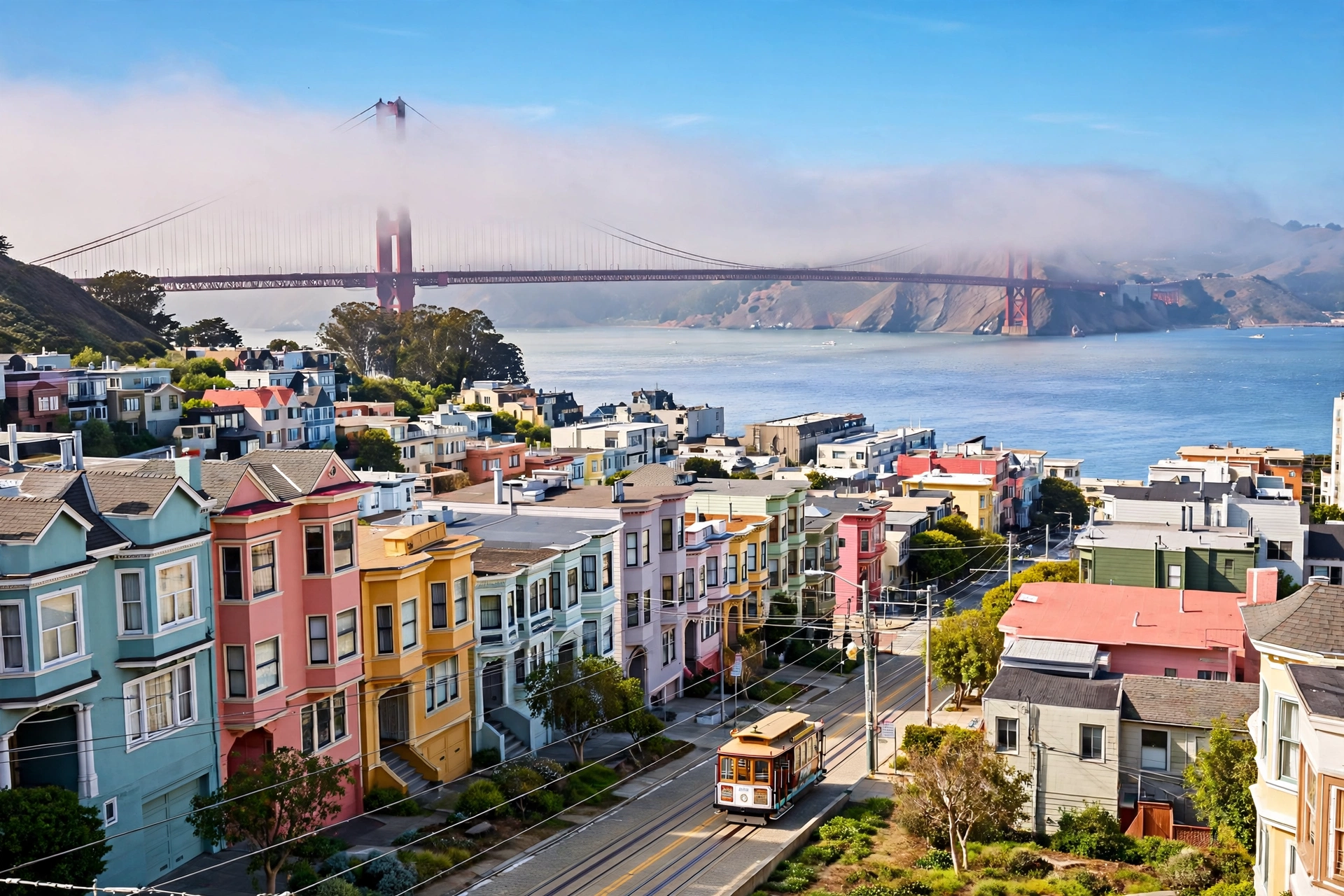
San Francisco is compact, hilly, and full of character: colorful Victorian houses, fog over the bay, cable cars climbing steep streets, and a food scene shaped by many cultures. You can cross the city in well under an hour by public transport, and you do not need a car or a week to get a real feel for it. You do need a plan, because the hills are steeper than they look and the weather can change in one afternoon. This guide covers the practical decisions — when to go, how long to stay, where to sleep, and how to get around — for travelers visiting from elsewhere in the United States. The guide to trip planning ideas for stress-free travel is a useful place to start that planning.
When is the best time to visit San Francisco for the first time?
The warmest, clearest weather often arrives in September and October, when the summer fog lifts. Spring, from March through May, is also a good choice, with fewer crowds and comfortable walking weather. Summer can surprise first-timers: June, July, and August often bring cool fog, gray mornings, and chilly wind near the coast and the Golden Gate Bridge. That does not make summer a bad time, but do not pack for a beach holiday.
Winter brings rain and shorter days, but also quieter streets. If you visit then, keep an indoor option ready for each day, such as a museum or a market hall. Check the forecast each morning, because conditions differ between neighborhoods: it can be sunny in the Mission District while it is foggy at the beach. Early fall suits clear views; late winter and early spring suit a slower, quieter trip.
How many days do you need in San Francisco?
Three full days is the sweet spot for a first visit: the Golden Gate Bridge and the waterfront, a day in the central neighborhoods, and a day for Alcatraz or a slower neighborhood walk. Four days is better if you want a day trip, such as Muir Woods or Sausalito, or a relaxed pace with long meals and unplanned wandering.
Two days can work, but you must choose: the waterfront and one neighborhood on day one, the bridge and one more area on day two. A single day is only a taste — the bridge, Fisherman’s Wharf, and a cable car ride will fill it. Five or more days suits travelers who want the parks, outer neighborhoods, and food streets locals love. Whatever you choose, plan one or two main activities per day and leave gaps for meals and rest.
What are the must-see sights for first-time visitors?
Start with the Golden Gate Bridge. Walk or cycle part of it if the weather allows, and take time at the viewpoints on both ends; it looks different in fog, sunshine, and sunset light. Then head to the waterfront. Fisherman’s Wharf and Pier 39 are busy and touristy, and that is why many first-timers enjoy them: street performers, sea lions, souvenir shops, and views across the bay to Alcatraz.
Alcatraz is a highlight for many people, but book as early as you can — the ferry is popular and tickets sell out — and allow half a day. The cable cars are both transport and a sight: the Powell-Hyde line climbs steep hills to the waterfront, while the Powell-Mason line takes a different route. Ride early or late in the day to avoid the longest lines. Add Union Square, Chinatown, the Painted Ladies at Alamo Square, Golden Gate Park, and the Ferry Plaza farmers market.
Which neighborhoods should first-time visitors stay in?
Union Square and downtown suit first-timers who want to be close to shops, restaurants, transit, and many hotels. It is busy and central, though less residential than other areas. Fisherman’s Wharf suits families who want to be near the waterfront, with many hotels and restaurants nearby, but it is the most tourist-focused part of town.
The Mission District offers murals, casual restaurants, and lively street life, and it tends to feel warmer and sunnier than the west side. The Castro is welcoming and walkable, with good restaurants and easy transit. Nob Hill and Russian Hill have quiet streets and classic views, though you will climb hills to get home. The Marina District is relaxed and near the water and the bridge. When comparing stays, check the nearest transit stop, whether the area feels comfortable to walk back to at night, and what is nearby for breakfast. The guide on how to choose the right accommodation for extended stays covers the same location questions, and staying near a transit line usually matters more than staying near a single sight.
How do you get around San Francisco without a car?
You do not need a car, and for most first-timers it is more trouble than it is worth: parking is limited, the hills are steep, and many streets are one-way. Public transport, walking, and the occasional rideshare cover almost everything. Muni runs buses, light rail, historic streetcars, and cable cars; BART connects the city with the airport and the East Bay.
Plan your airport arrival before you land. BART runs from San Francisco International Airport into downtown, often the simplest and most predictable way in, especially at busy times. Late at night or with heavy luggage, a rideshare or taxi may be more comfortable. The guide to smooth airport transfers in New York City explains how to plan that first airport journey so you arrive calm rather than confused.
In the city, walking is often the best way to see it, and Muni covers longer distances — check a transit app for live times. Treat cable cars as an experience, not your main transport, and use rideshares for late nights or awkward routes.
Which San Francisco transport option is best for you?
Different options suit different days. This table compares the main choices for first-time visitors.
| Transport option | Best for | Cost level | Speed | Notes |
|---|---|---|---|---|
| Walking | Short distances, exploring | Free | Slow on hills | Best way to see the city |
| Muni bus and light rail | Everyday travel | Low | Medium | Check live times |
| BART | Airport and East Bay | Low to medium | Fast | Best airport link |
| Cable car | A classic ride, hill views | Higher per ride | Slow | Expect lines |
| Rideshare or taxi | Late nights, luggage | Higher | Medium | Useful in small doses |
For most first-timers, the best mix is walking plus Muni, BART for the airport, and one cable car ride for the experience. Load a transit fare card before your first journey and keep it in an easy-to-reach pocket.
What should you pack for San Francisco weather?
Dress in layers, all year round. A typical day can start cool and foggy, warm up by midday, turn windy in the afternoon, and cool down sharply after sunset. A t-shirt, a light sweater or fleece, and a windproof jacket cover most days. Add a scarf in the colder months and a compact umbrella or hooded jacket when rain is likely.
Comfortable walking shoes are essential. You will walk more than you expect, often uphill, so choose shoes you have already broken in, with good grip and support — not brand-new shoes or high heels. Sunglasses and sunscreen matter even on foggy days, because the sun can break through quickly. Carry a small day bag for your extra layer, water, snacks, and a phone charger, and keep it secure in crowded areas. In summer, bring the same layers as in spring; in fall, expect warm days but cool evenings; in winter, add a warmer coat and waterproof shoes.
What should you eat in San Francisco?
You do not need a fine-dining budget to eat well. Start with what the city is known for: sourdough bread, fresh seafood, and dishes shaped by the many communities that call it home. The Ferry Building and its farmers market are a good introduction, with bakeries, cheese stalls, coffee, and prepared food. Chinatown has dim sum, bakeries, and tea shops worth exploring on foot, and the Mission District is known for burritos and casual restaurants.
Try the classic waterfront dishes, such as clam chowder in a sourdough bread bowl, and enjoy the strong coffee culture in almost every neighborhood. For a special meal, book ahead — popular restaurants fill up quickly, especially at weekends. For everyday meals, follow the locals: a busy, unpretentious place with a short menu is often better than a large restaurant with a long menu and a view. Vegetarian, vegan, and gluten-free options are widely available; mention allergies clearly when you order. Tipping is customary for table service in the United States, so factor it into your meal budget.
How can first-time visitors save money in an expensive city?
Hotels and meals add up quickly, but a first visit does not have to break the bank. Visiting outside the busiest periods, staying slightly away from the most central blocks, and booking early all tend to help. Compare neighborhoods, not just room rates: a cheaper room in a poorly connected area can cost you more in transport and time.
Many of the best experiences cost little or nothing: walking the Golden Gate Bridge, exploring Golden Gate Park, browsing the Ferry Plaza market, watching the sea lions at Pier 39, and riding a historic streetcar. Museums often have free or reduced-price days, so check before you go. Bakeries, markets, food halls, and casual neighborhood restaurants offer good food for far less than a formal dinner. The guide to budget travel tips for expensive cities that USA travelers can use has practical ideas that apply directly to San Francisco. Use public transport instead of a rental car, fill a reusable water bottle, and plan one special meal a day.
What mistakes do first-time visitors make in San Francisco?
The most common mistake is underestimating the hills and the weather: visitors plan to walk everywhere in summer clothes, then end up cold and footsore by mid-afternoon. Dress in layers, wear proper walking shoes, and use transit for the steepest climbs. The second is trying to see everything in two days. The city looks small on a map, but hills, fog, and distances between neighborhoods slow you down — a packed schedule leaves no time to enjoy it.
The third mistake is only visiting the most famous spots. Fisherman’s Wharf, Union Square, and the bridge are worth seeing, but spend time in at least one residential neighborhood and eat where locals eat. The fourth is ignoring safety basics: keep valuables out of sight, do not leave bags visible in a parked car, stay aware in crowded areas, and trust your instincts. The guide to solo travel safety and what actually matters on the road covers the habits that keep a trip safe, alone or with others. Finally, beware of scams and misleading offers, and book tours and tickets through official channels. The guide on common tourist scams to avoid explains the tricks that catch travelers in many cities. Book Alcatraz early and keep your phone charged.
Frequently asked questions
How many days are enough for a first visit to San Francisco?
Three full days is enough for most first-time visitors, covering the Golden Gate Bridge, the waterfront, Alcatraz, the cable cars, and at least one neighborhood in depth. Four days is better if you want a day trip or a slower pace.
What is the best area to stay in San Francisco for first-time visitors?
Union Square and downtown suit first-timers who want a central base near shops, restaurants, and transit. Fisherman’s Wharf suits families near the waterfront, while the Mission District and the Castro suit travelers who prefer a more local, walkable feel.
Do I need a car in San Francisco?
No, most first-time visitors do not need a car. Public transport, walking, and the occasional rideshare cover the city well. A car adds parking costs and stress on steep, busy streets.
Is San Francisco safe for first-time visitors?
San Francisco is a major city, so normal city awareness applies. Stay in well-lit, busy areas at night, keep valuables out of sight, do not leave bags visible in a parked car, and be careful in crowded tourist areas.
What is the weather like in San Francisco?
Weather is mild but changeable, with fog, wind, and cool evenings common all year. Summer can be foggy and cool near the coast, while September and October are often the warmest and clearest months. Dress in layers and carry a light jacket whatever the season.
When should I book Alcatraz tickets?
Book Alcatraz tickets as early as you can, ideally as soon as your dates are fixed. The ferry is popular and often sells out, at busy times. Allow half a day for the visit.
San Francisco rewards first-time visitors who arrive prepared and then slow down enough to enjoy it. Pick a central base, dress in layers, use public transport, and plan one or two big sights a day. Leave room for the unplanned — a foggy bridge at sunrise, a mural you did not expect, a meal in a neighborhood you only meant to pass through.