Running and the New Science Behind Its Benefits
For many decades, people have thought that running was an inexpensive way to get into shape. Put shoes on. Open the door. Go. Recently, however, researchers have found something much more intriguing about the effects of running. The benefits of running go beyond physical health.
Mental health improvements are strong
Recent large-scale reviews of studies regarding aerobic activity, such as running, show it may be helpful for symptoms of both depression and anxiety. In some cases, studies report results that are equal to or similar to those of traditional treatment methods. This is important since running is an easily accessible, low-cost method to add to your daily routine.
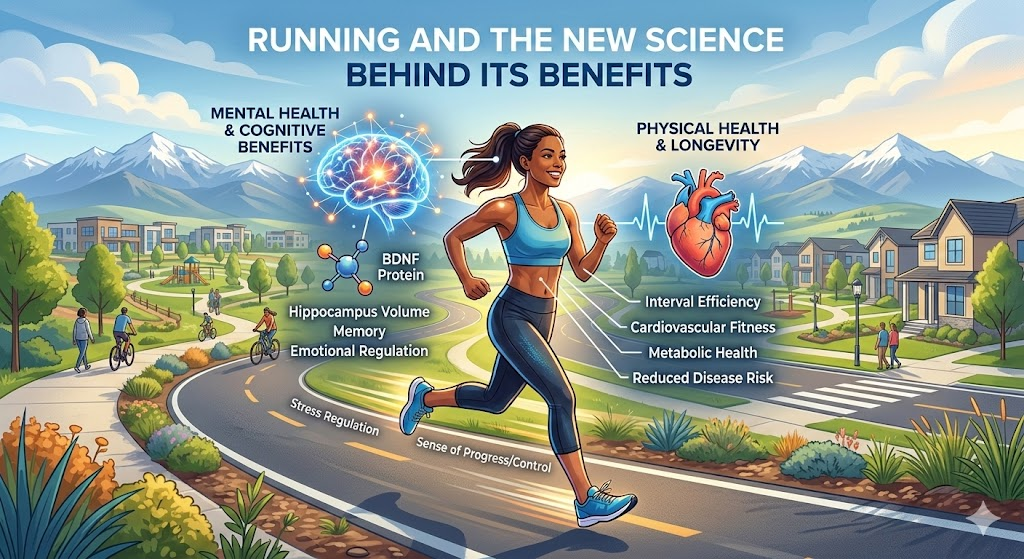
Researchers are also finding more information about how the brain functions before and after a run. Aerobic activity increases levels of a protein called brain-derived neurotrophic factor (BDNF). This is the primary support system for the development of brain cells and learning as well as emotional regulation. Higher levels of this protein are associated with higher moods and greater ability to resist stressful situations.
There is also evidence that regular aerobic exercise can physically change the brain. Studies show increases in hippocampal volume, the area tied to memory and learning. Even small structural changes here can influence focus and recall over time.
Physical health benefits are always expanding
Another newer insight involves efficiency. Short bursts of high-intensity running may deliver major health improvements in less time than traditional steady workouts. Interval running can improve cardiovascular health, blood sugar control, and fat metabolism with relatively brief sessions.
Longevity research is also encouraging. Higher levels of vigorous activity are associated with lower mortality risk and reduced heart disease rates. Running plays a direct role because it improves heart function, circulation, and metabolic health all at once.
Connections to brain activity and development
What makes running especially interesting today is how it intersects with psychology and education. Programs connectedto trauma-informed education increasingly incorporate movement and physical activity. The reason is straightforward.
Exercise helps regulate the nervous system. It reduces stress hormones and improves emotional control. For students dealing with adversity or chronic stress, physical activity can support learning readiness in ways traditional classroom methods cannot.
Movement breaks, outdoor activity, and structured exercise are becoming more common in supportive learning environments. The goal is not athletic performance. The goal is emotional regulation and cognitive readiness.
Environment and lifestyle influence behavior
The connections between these concepts are evident in areas many would consider unrelated. Examples include community-based wellness programs, school based programs, and even urban planning. As an example, a person looking for real estate in Aurora, CO, may be able to find new developments with walking/biking trails/parks and other pedestrian-friendly features such as sidewalks and crosswalks.
These development trends reflect recognition of how our environment influences our health-related behaviors. Access also plays a significant role in this. The safer the path you have to run on the more likely you will choose to run there.
The psychological effect of progress
Running also offers something harder to measure but equally meaningful. A sense of agency. Progress. Control. Each mile completed reinforces capability. That psychological effect may explain why runners often report improvements in confidence and resilience beyond physical fitness alone.
The science continues to evolve. But one message is already clear. Running is not just an exercise. It is brain support, stress regulation, and long-term health investment wrapped into a single habit.
Disclaimer
The information provided in this article is for general educational and informational purposes only and is not intended as medical, psychological, or professional health advice. Running and other forms of exercise may not be suitable for everyone, and individual results can vary based on personal health conditions, fitness levels, and other factors. Always consult with a qualified healthcare provider or licensed professional before beginning any new exercise program, making changes to your physical activity, or using exercise as a treatment for mental or physical health concerns. References to real estate, community planning, or educational practices are for illustrative purposes only and should not be interpreted as endorsements or guarantees of specific outcomes.