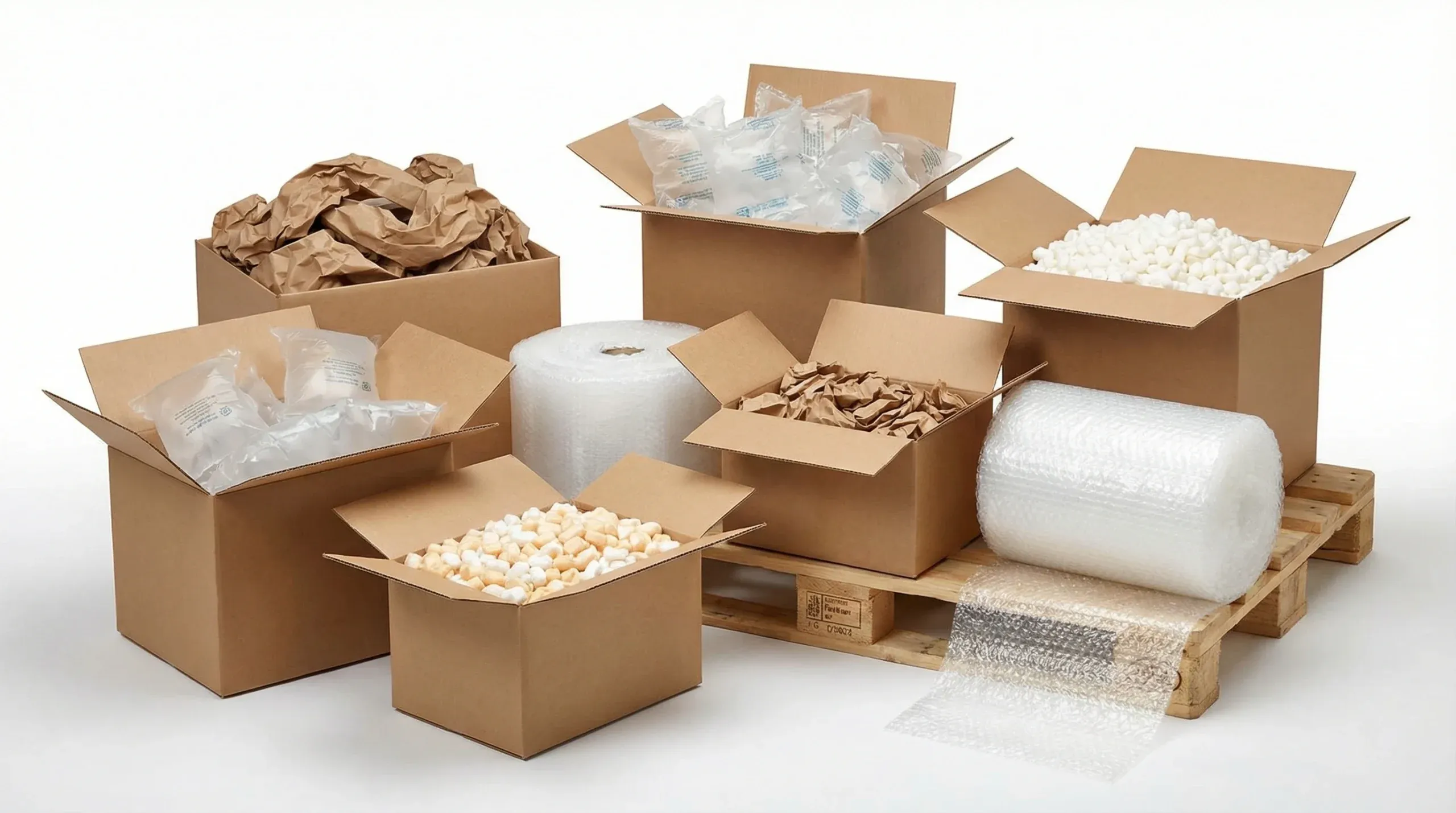
The Complete Guide to Shipping Fragile Items: 15 Box Types Every E-commerce Business Must Know
E-commerce businesses face mounting pressure to deliver products intact while controlling shipping costs and maintaining customer satisfaction. When fragile items arrive damaged, the consequences extend far beyond replacement costs customer trust erodes, return processing consumes resources, and brand reputation suffers. The packaging decision directly impacts these outcomes, yet many businesses rely on generic solutions that fail to address the specific protection requirements of delicate merchandise.
The challenge intensifies as shipping volumes increase and handling becomes more automated across distribution networks. Standard cardboard boxes offer basic protection, but fragile items require specialized packaging systems that account for shock absorption, compression resistance, and secure internal positioning. Understanding which box types align with specific product vulnerabilities helps businesses reduce damage rates and create more predictable shipping outcomes.
This comprehensive analysis examines fifteen distinct box types designed for fragile item protection, explaining their construction principles, appropriate applications, and operational considerations. Each packaging solution addresses different aspects of fragile item vulnerability, from impact resistance to environmental protection during transit.
Understanding Fragile Item Packaging Requirements
Fragile items face multiple risk factors during shipping that standard packaging cannot adequately address. Impact forces occur when packages drop, slide, or collide during handling, while compression forces develop when heavy items stack above lighter packages. Vibration from transportation vehicles creates continuous stress, and temperature fluctuations can affect both products and packaging materials.
Effective protection requires packaging systems that distribute forces away from vulnerable products while maintaining structural integrity throughout the shipping process. Shipping boxes for fragile items incorporate design features like reinforced corners, cushioning integration points, and enhanced wall thickness to address these specific challenges. The packaging must also accommodate various cushioning materials without compromising box strength or increasing dimensional weight disproportionately.
Product characteristics influence packaging requirements significantly. Glass items need protection from sharp impact forces, while electronics require anti-static properties and moisture control. Ceramic products benefit from multi-layer cushioning systems, and mechanical items with moving parts need immobilization features. Matching box design to product vulnerability patterns creates more reliable protection systems.
Impact Force Distribution
Impact protection depends on the packaging system’s ability to absorb and redirect forces away from the product. Double-walled construction provides superior impact resistance compared to single-wall options, while specialized corner reinforcements prevent box failure at stress concentration points. Internal suspension systems further isolate products from external forces by creating buffer zones within the packaging structure.
The timing of impact absorption matters as much as the total energy absorbed. Gradual force dissipation prevents sudden acceleration changes that can damage delicate internal components, while immediate energy absorption stops force transmission entirely. Different box constructions excel in different impact scenarios, making product-specific selection essential for optimal protection.
Compression Resistance Factors
Compression strength determines how much weight packages can support when stacked during storage and transportation. Edge crush strength and box compression strength work together to maintain package integrity under load, while internal void spaces must resist collapse without crushing the protected product. Proper compression resistance prevents package deformation that could compromise cushioning effectiveness.
Stacking patterns affect compression loads unevenly across package surfaces. Corner loading creates higher stress concentrations than distributed loading, while irregular stacking increases the risk of package failure. Box design must account for worst-case loading scenarios commonly encountered in shipping networks.
Corrugated Box Variations for Enhanced Protection
Corrugated boxes form the foundation of most fragile item packaging systems, but significant variations exist in construction methods and protective capabilities. Standard single-wall corrugated provides basic protection suitable for lightweight, moderately fragile items, while double-wall construction offers increased impact resistance and compression strength for heavier or more delicate products.
Triple-wall corrugated represents the highest level of corrugated protection, with three layers of fluting creating exceptional strength and cushioning properties. This construction handles heavy fragile items and provides extended protection during long-distance shipping or multiple handling cycles. The increased thickness also creates more space for integrated cushioning systems.
Edge crush strength ratings indicate the corrugated material’s ability to resist compression forces, while burst strength measures resistance to sudden impact forces. These specifications help businesses select appropriate corrugated grades based on their specific product protection requirements and shipping conditions.
Single-Wall Applications
Single-wall corrugated works effectively for lightweight fragile items that require basic impact protection and cost-effective packaging solutions. Items like picture frames, lightweight ceramics, and non-critical electronics often ship successfully in single-wall construction when combined with appropriate cushioning materials.
The limitation of single-wall construction becomes apparent with heavier items or extended shipping cycles. Compression strength decreases over time, particularly in humid conditions, and impact resistance remains limited compared to multi-wall alternatives. Understanding these constraints helps businesses apply single-wall solutions appropriately.
Double-Wall Advantages
Double-wall construction significantly improves both impact resistance and compression strength while maintaining reasonable cost levels. The additional fluting layer distributes forces more effectively and provides better crush resistance for stacking applications. Most moderately fragile items benefit from double-wall protection.
Double-wall boxes accommodate heavier cushioning materials without structural compromise, enabling more comprehensive protection systems. The increased wall thickness also provides better scuff resistance and moisture protection during handling and storage.
Triple-Wall Performance
Triple-wall corrugated delivers maximum protection for highly fragile or valuable items requiring superior impact resistance. The three-layer construction creates exceptional compression strength suitable for heavy items and extended shipping cycles. Industries shipping delicate machinery, precision instruments, or high-value electronics commonly rely on triple-wall solutions.
The increased material thickness of triple-wall construction requires consideration during shipping cost calculations, as dimensional weight may increase significantly. However, the protection benefits often justify the additional costs for items where damage represents substantial financial risk.
Specialized Cushioning Integration Boxes
Cushioning integration represents a critical factor in fragile item protection, requiring boxes designed to work effectively with various cushioning materials. Standard boxes often lack features that optimize cushioning performance, leading to settling, shifting, or compression of protective materials during transit.
Purpose-built cushioning integration boxes include features like cushioning retention tabs, predetermined fold lines for custom inserts, and sizing optimized for standard cushioning material dimensions. These design elements ensure cushioning materials maintain their protective positioning throughout the shipping process.
The relationship between box dimensions and cushioning requirements affects both protection effectiveness and shipping efficiency. Boxes sized specifically for cushioning integration minimize void space while ensuring adequate protection, reducing both material costs and dimensional weight charges.
Foam Integration Systems
Foam integration boxes feature design elements that accommodate custom-cut foam inserts or pre-formed foam packaging systems. Precise dimensional tolerances ensure foam fits securely without compression that would reduce protective properties, while corner reinforcements accommodate the additional weight of foam-protected items.
Custom foam cutting requires careful coordination between box dimensions and product specifications. Integration boxes often include reference points or scoring that facilitates accurate foam cutting and placement, reducing assembly time and ensuring consistent protection levels.
Air Cushioning Compatibility
Air cushioning systems require boxes with smooth interior surfaces and corner designs that prevent puncture of inflatable cushioning materials. Integration features include rounded internal corners, smooth tape application areas, and sizing that accommodates air cushioning expansion without box bulging.
Proper air cushioning integration maintains product isolation while allowing cushioning materials to absorb impact forces effectively. Box design must balance internal space utilization with cushioning expansion requirements to optimize protection.
Multi-Compartment and Divider Systems
Multi-compartment boxes address situations where multiple fragile items ship together or single items require component separation during transit. Integrated divider systems prevent item-to-item contact that could cause damage, while maintaining overall package integrity and shipping efficiency.
Divider systems range from simple cardboard partitions to complex multi-level separation structures. The choice depends on item characteristics, protection requirements, and assembly complexity considerations. Well-designed divider systems integrate structurally with the box walls to provide additional compression resistance.
Component separation becomes critical when shipping items with different protection requirements or vulnerability patterns. Hard and soft components, electronic and mechanical elements, or items of significantly different weights benefit from separation systems that address each component’s specific needs.
Adjustable Partition Features
Adjustable partition systems accommodate varying product sizes while maintaining separation effectiveness. These systems typically use slotted cardboard components that interlock to create custom compartment configurations, allowing businesses to optimize single box designs for multiple product variations.
The structural contribution of adjustable partitions affects overall box strength and compression resistance. Properly designed partition systems enhance box performance by creating internal bracing that distributes loads more effectively across the package structure.
Fixed Compartment Applications
Fixed compartment designs optimize protection for specific product combinations or regularly shipped item sets. The permanent partition structure provides maximum strength and protection consistency, while simplified assembly reduces packaging time and training requirements.
Fixed compartments work effectively when product dimensions and shipping patterns remain consistent. The investment in custom partition tooling becomes economical when shipping volumes justify the development costs and protection requirements demand specialized solutions.
Temperature and Moisture Control Boxes
Environmental protection extends beyond physical impact resistance to include temperature stability and moisture control. Fragile items often include materials sensitive to humidity changes, temperature fluctuations, or condensation formation during shipping. According to the National Weather Service, relative humidity can vary dramatically during transportation, affecting both products and packaging materials.
Moisture control boxes incorporate vapor barrier materials, desiccant integration points, and sealing systems that maintain internal environment stability. These features prevent condensation damage, corrosion, and material degradation that can occur during shipping through varying climate conditions.
Temperature control solutions range from passive insulation systems to active temperature maintenance using phase-change materials or thermal packs. The choice depends on product temperature sensitivity, shipping duration, and acceptable temperature variation ranges.
Vapor Barrier Integration
Vapor barrier boxes include moisture-resistant linings or coatings that prevent humidity infiltration while maintaining box structural properties. These barriers must integrate seamlessly with cushioning systems and closure methods to maintain protection effectiveness throughout the shipping cycle.
The selection of vapor barrier materials affects both protection performance and box recyclability. Businesses must balance environmental considerations with protection requirements when specifying moisture control solutions.
Thermal Insulation Properties
Insulated boxes provide temperature stability for items sensitive to thermal cycling or extreme temperature exposure. Insulation materials integrated into box construction maintain internal temperatures while preserving structural integrity and handling characteristics.
Thermal mass considerations affect insulation effectiveness significantly. Products with high thermal mass require different insulation strategies than lightweight items, and shipping duration influences the required insulation performance levels.
Suspension and Isolation Box Systems
Suspension systems represent advanced fragile item protection by physically isolating products from box walls and external forces. These systems use various mechanisms to maintain product position while preventing force transmission from impacts, vibration, or compression loads.
Suspension methods include elastic cord systems, spring-loaded platforms, and foam suspension matrices that hold products in predetermined positions. The suspension system must accommodate product weight while maintaining isolation effectiveness throughout shipping and handling cycles.
Product accessibility affects suspension system design significantly. Systems must balance protection effectiveness with reasonable packaging and unpacking procedures, ensuring that protection benefits justify any additional complexity in handling requirements.
Elastic Suspension Methods
Elastic suspension uses tensioned cords or elastic materials to hold products away from box surfaces. This approach provides excellent vibration isolation and impact protection while accommodating products with irregular shapes or attachment points.
Elastic material selection affects suspension performance and longevity. Materials must maintain tension and elasticity throughout shipping cycles while resisting degradation from temperature variations and handling stress.
Platform Isolation Systems
Platform systems create stable, isolated surfaces within boxes that protect products from external forces while maintaining secure positioning. These platforms typically integrate with cushioning materials to provide comprehensive protection against multiple force vectors.
Platform design must accommodate product mounting or positioning requirements while maintaining structural integrity under load. The platform isolation effectiveness depends on proper integration with both the box structure and cushioning systems.
Industry-Specific Protection Solutions
Different industries require specialized packaging approaches that address unique product characteristics and handling requirements. Electronics packaging must consider anti-static properties and component isolation, while glassware requires impact distribution and sharp edge protection.
Medical device packaging often requires sterility maintenance along with physical protection, creating additional constraints on materials and sealing methods. Automotive parts may need corrosion protection and secure mounting systems that prevent movement during shipping.
Regulatory requirements influence packaging design in many industries, particularly those involving hazardous materials, medical devices, or food contact surfaces. Compliance considerations must integrate with protection requirements to create acceptable packaging solutions.
Electronics Protection Requirements
Electronic devices require protection from electrostatic discharge, moisture, and mechanical shock simultaneously. Specialized boxes incorporate anti-static materials, moisture barriers, and cushioning systems designed specifically for electronic component protection.
Circuit board protection demands particularly careful attention to flexural stress prevention and component isolation. Packaging systems must prevent bending or twisting forces that could damage delicate electronic connections or surface-mounted components.
Glassware and Ceramics Considerations
Glass and ceramic items require packaging that prevents sharp impact forces while accommodating irregular shapes and fragile protrusions. Specialized boxes often include pre-formed cavities or adjustment systems that conform to product contours.
Edge and corner protection becomes critical for glassware, as these areas typically represent the most vulnerable points during handling. Packaging systems must provide concentrated protection at stress points while maintaining overall structural integrity.
Cost-Benefit Analysis of Protection Levels
Packaging cost optimization requires balancing protection effectiveness against material costs, shipping expenses, and damage risk assessment. Higher protection levels typically increase packaging costs but may reduce overall expenses by preventing damage-related costs including replacements, returns processing, and customer service activities.
Damage rate analysis helps businesses determine optimal protection levels by quantifying the relationship between packaging investment and damage reduction. Industries with high-value products or strict damage tolerance typically justify premium packaging solutions more easily than commodity applications.
Shipping cost implications include both material costs and dimensional weight considerations. Enhanced protection often increases package dimensions and weight, affecting shipping charges that may offset protection benefits if not properly managed.
Return Cost Impact
Return processing costs include reverse logistics, inspection, repackaging, and customer service activities that extend far beyond simple replacement costs. Preventing damage through appropriate packaging often provides return on investment that exceeds the initial packaging cost increase.
Customer satisfaction implications of shipping damage affect repeat purchase rates and brand reputation in ways that extend beyond immediate financial impacts. Premium packaging can serve as a brand differentiator while providing practical protection benefits.
Volume-Based Optimization
Shipping volume affects packaging cost optimization significantly, as higher volumes typically justify premium packaging solutions and custom development costs. Businesses must evaluate packaging decisions based on total volume projections and damage rate improvement potential.
Custom packaging development requires minimum volume commitments that may not suit all businesses. Understanding volume thresholds helps companies determine when custom solutions become economically viable compared to standard options.
Implementation and Testing Considerations
Packaging implementation requires systematic testing to validate protection effectiveness under real-world shipping conditions. Laboratory testing provides baseline performance data, while field testing reveals actual shipping network challenges that may not appear in controlled conditions.
Testing protocols should simulate worst-case scenarios commonly encountered during shipping, including drop testing, compression testing, and vibration exposure. Multiple test cycles help identify packaging degradation patterns and long-term performance characteristics.
Supplier qualification ensures packaging materials meet specifications consistently over time. Quality control procedures must address both material properties and manufacturing consistency to maintain protection performance across production runs.
Performance Validation Methods
Drop testing simulates impact scenarios using standardized procedures that reflect actual handling conditions. Test protocols must account for package orientation, drop height, and surface characteristics to provide meaningful performance data.
Compression testing evaluates stacking performance under various load conditions and time periods. Extended compression testing reveals packaging degradation patterns that may not appear during short-term evaluation.
Supply Chain Integration
Packaging integration with existing fulfillment operations affects implementation success significantly. New packaging systems must accommodate current equipment, training requirements, and workflow patterns to achieve successful adoption.
Staff training requirements vary with packaging complexity and assembly procedures. Simple systems require minimal training investment, while complex protection systems may demand comprehensive training programs to ensure consistent implementation.
Conclusion
Selecting appropriate shipping boxes for fragile items requires comprehensive understanding of product vulnerabilities, shipping conditions, and protection system capabilities. The fifteen box types examined provide solutions ranging from basic corrugated protection to advanced suspension systems, each addressing specific aspects of fragile item shipping challenges.
Success depends on matching packaging capabilities to actual protection requirements while considering cost implications and operational constraints. Businesses benefit from systematic evaluation of their specific needs rather than adopting generic solutions that may not address their unique product characteristics and shipping patterns.
Implementation requires careful testing and supplier qualification to ensure packaging performs consistently under real-world conditions. The investment in appropriate fragile item packaging typically provides returns through reduced damage rates, improved customer satisfaction, and more predictable shipping outcomes that support business growth and reputation management.