Best time to visit Thailand: a season-by-season guide for US travelers
Quick answer: The best time to visit Thailand is the cool, dry season, roughly November through February, when the weather is cooler and drier across Bangkok, Chiang Mai and the islands. Thailand is a year-round destination, and the right month depends on whether you want beaches, festivals, fewer crowds or lower costs.
Thailand is warm all year, so there is no month when you need a winter coat. But the difference between a dry, breezy morning in Chiang Mai and a sticky, rain-soaked afternoon in Bangkok is large enough to change how your whole trip feels. This guide explains the seasons in plain terms, how timing changes from north to south, and how to choose dates that fit the trip you actually want.
What are Thailand’s three main seasons?
Thailand has three broad seasons: a cool, dry season, a hot season and a rainy season.
The cool, dry season runs roughly from November through February. Days are warm rather than scorching, humidity is lower, rain is uncommon, and evenings in the north can feel genuinely cool. It is the most comfortable season for sightseeing.
The hot season runs roughly from March through May. Temperatures climb, humidity builds, and midday sightseeing becomes tiring. This is the season of Songkran, the Thai New Year water festival.
The rainy season, often called the green season, runs roughly from June through October. Rain usually arrives in heavy but short afternoon downpours rather than all-day drizzle, and the countryside turns vividly green. Mornings are often bright, which surprises first-time visitors who imagine weeks of unbroken rain.
When is the cool and dry season in Thailand?
The cool, dry season, roughly November through February, is the best time to visit Thailand if comfort is your top priority. Bangkok’s temples are pleasant to explore on foot, Chiang Mai’s mountain air feels fresh, and the southern islands offer the clearest skies.
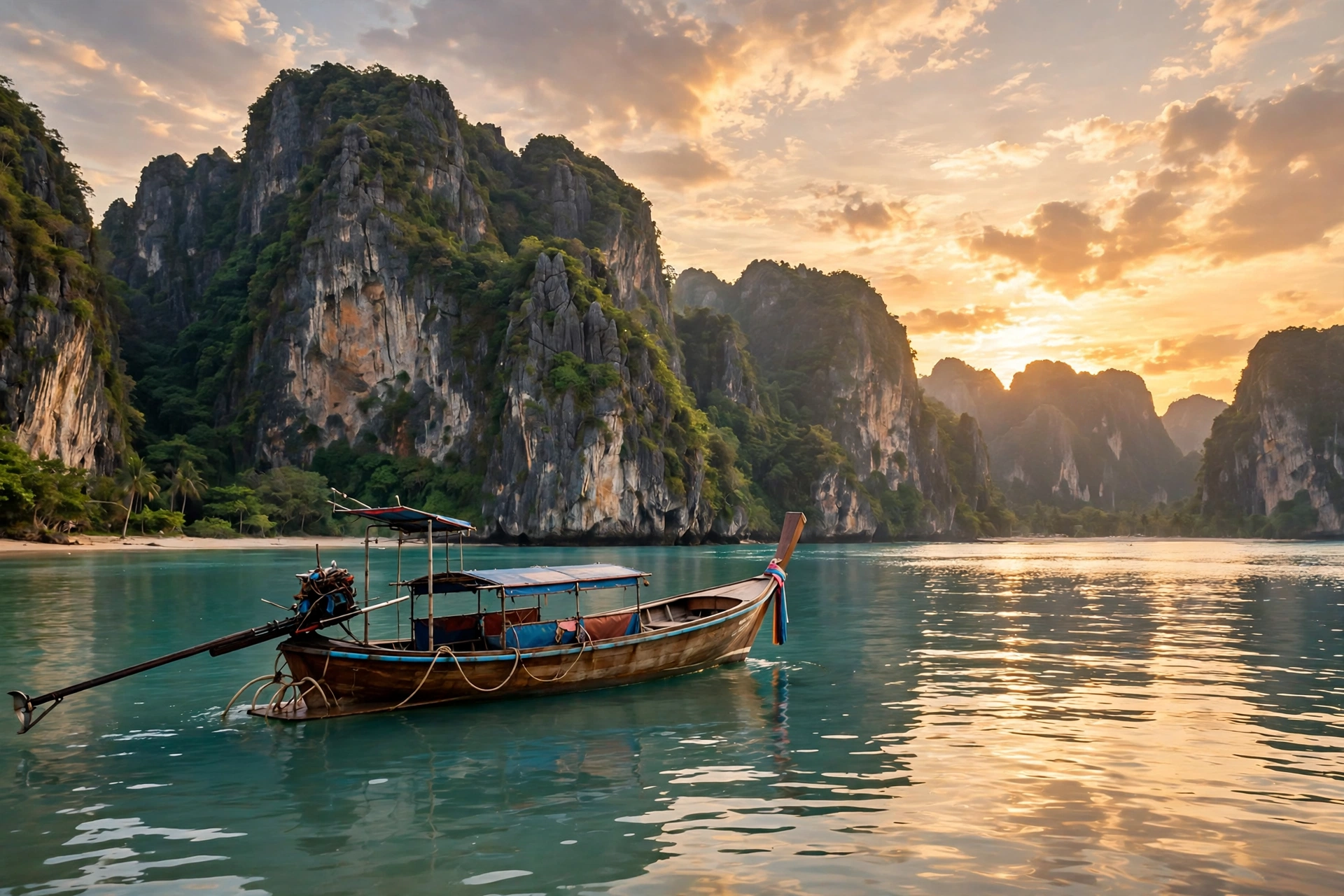
For a first trip, these months make everything easier. You can walk around the Grand Palace and Wat Pho without retreating indoors every hour, take a longtail boat or hike to a viewpoint, and browse a night market in the evening.
There are trade-offs. This is peak season, so the most famous places are at their most crowded, and popular hotels and flights tend to book up earliest and cost the most. Book ahead, aim for early mornings at the busiest temples, and mix one famous stop with quieter neighborhoods nearby. Early in the season the countryside is at its greenest; later on, the air is at its driest and the north is at its coolest.
When is the hot season, and who should still go?
The hot season, roughly March through May, is the most demanding time to be outdoors in Thailand, but it is far from a bad time to visit. If you plan around the heat, you can still have a wonderful trip, with smaller crowds at many attractions outside the festival period.
The key is to change your daily rhythm. Start sightseeing early, when temples open and the air is still bearable, then rest through the hottest part of the afternoon. Swim, visit a museum, take a cooking class or enjoy a long lunch in the shade, then head out again in the evening, when night markets fill with food stalls. Drink water constantly, wear a hat, and use sunscreen even on cloudy days.
The hot season suits some travelers especially well. Beach lovers will find warm seas and long sunny days. Festival lovers come for Songkran in April, when the whole country turns into a giant water celebration. The mistake is packing a hot-season day like a cool-season day, with back-to-back outdoor sightseeing from morning to night. Slow down, and the season works.
What is the rainy season really like?
The rainy season has the worst reputation of Thailand’s three seasons, and it is the most misunderstood. For many travelers it is one of the most rewarding times to visit, as long as you arrive with a flexible plan.
Rain during these months usually falls in intense afternoon bursts, often lasting an hour or two, rather than steady rain all day. Mornings are frequently bright. After a downpour the air feels fresher and the streets empty out, which can make for some of the best photography of the year.
The countryside is transformed. Rice fields glow green, waterfalls run strongly, and national parks are at their lushest. This suits travelers who care more about nature and atmosphere than guaranteed sunshine, and anyone who prefers quiet temples to peak-season buzz. There are downsides: some island boat services run less often when seas are rough, so keep a museum, market or cooking class in reserve for a wet afternoon, pack a compact rain jacket, and store electronics in a waterproof pouch.
Does the best time change by region?
Yes. Thailand is a long country, and the north, the center and the southern coasts do not share the same weather at the same time. A month that is perfect in Chiang Mai can be wet on one coast and dry on another.
Northern Thailand, including Chiang Mai, Chiang Rai and Pai, has the clearest seasons of all. The cool, dry months are ideal for temples, markets, hiking and cycling, and the early rainy season is a strong second pick for green scenery and fewer visitors.
Central Thailand, including Bangkok and Ayutthaya, is hot and humid for much of the year, with the cool, dry season offering the most relief. Bangkok is best explored early in the morning and again after sunset, whatever the month. River trips, covered markets and museums make it workable in every season.
The southern islands split into two coasts with different patterns. The Andaman coast, including Phuket, Krabi and the Phi Phi islands, is generally driest and calmest during the cool, dry season, and roughest during the rainy months. The Gulf coast, including Koh Samui, Koh Phangan and Koh Tao, follows a different rhythm, with its wettest weather often arriving later in the year. When one coast is rainy, the other is often drier.
Decide where you are going first, then check the season for those places, rather than asking about Thailand as a single block. Many US travelers also combine Thailand with a neighboring country, since the region is compact. Before you decide, read about the things to do in Siem Reap, because Cambodia’s temples pair naturally with a Thailand itinerary. And if the region sparks a longer journey, the top destinations in India offer a natural next chapter.
When are Thailand’s big festivals?
Festivals are one of the best reasons to time a Thailand trip deliberately, because they turn an ordinary visit into something memorable. Two festivals matter most for planning.
Songkran, the Thai New Year water festival, takes place in April, during the hot season. Streets fill with water fights, parades and family gatherings, and Bangkok, Chiang Mai and the islands all celebrate in their own style. It is joyful, chaotic and soaking wet, and one of the busiest weeks of the year, so book early and protect your phone.
Loy Krathong, the festival of lights, usually falls in November, at the start of the cool, dry season. People float small decorated baskets on rivers and canals, lanterns rise into the night sky in the north, and the whole country glows. Chiang Mai is the most famous place to experience it, and accommodation there books up far ahead.
How long should US travelers spend in Thailand?
For most US travelers, ten to fourteen days is a comfortable length for a first Thailand trip. That window allows for Bangkok, the north and one island group without spending every day in transit, and it leaves room for a slow day when the heat or a rainstorm asks you to pause.
A shorter trip of about a week still works if you keep it focused: choose either Bangkok and the north, or Bangkok and one island group. Thailand punishes over-ambitious itineraries, because transfers, boats and check-in times add up quickly.
The long flight is part of the planning too: most routes connect through a hub in Asia or the Middle East, and the total journey can take most of a day. Reading up on the best airlines for long flights before you book can make a real difference to how you feel on arrival. Give yourself a gentle first day in Bangkok.
Jet lag deserves the same respect: Thailand is many hours ahead of the United States, so your body clock will need a day or two to adjust. Plan your first days around daylight and fresh air, and follow practical advice on staying healthy across time zones so you arrive feeling human rather than exhausted.
How do you choose the best month for your trip?
The best month matches your priorities, not someone else’s favorite. For comfortable sightseeing, choose the cool, dry season and accept the crowds. For beaches and calm seas, match your island coast to its driest months, remembering that the Andaman and Gulf coasts peak at different times. For festivals, build around Songkran in April or Loy Krathong in November and book far ahead. For green landscapes, quiet temples and lower costs, choose the rainy season and keep your plans flexible. For a bit of everything, the shoulder weeks around the peak season are often the sweet spot.
Think about trip style as well as weather. Beach holidays peak in the driest months on your chosen coast, culture tours are happiest in the cool, dry season, and adventure trips suit the cool months for comfort and the early rainy season for green landscapes. For ideas on balancing active days with cultural stops, look at Asian destinations that mix adventure and culture and apply the same thinking to your Thailand route. Book the pieces that sell out first, usually flights and popular hotels in peak season. Before you commit, read a beginners guide to choosing the right travel coverage so you understand what your policy covers if weather, illness or a schedule change disrupts your plans.
What should you pack for each season?
Packing for Thailand is mostly about light layers, sun protection and rain readiness. In every season, pack breathable clothing, comfortable walking shoes, sunscreen, a hat and a reusable water bottle. Modest clothing that covers shoulders and knees is needed for temple visits.
For the cool, dry season, add a light jacket for early mornings and evenings in the north. For the hot season, pack the lightest clothing you own, extra sunscreen, and a change of shirt in your day bag. For the rainy season, a compact rain jacket is essential, along with shoes that grip wet streets and a waterproof pouch for your phone and passport. Whatever the season, pack light: Thailand has laundry services in most towns, and a smaller bag makes every transfer and boat ride easier.
Thailand seasons at a glance
| Season | General weather | Crowds | Best for |
|---|---|---|---|
| Cool and dry, roughly Nov–Feb | Cooler and drier, clear skies | Busiest, book early | First trips, temples, islands, festivals |
| Hot, roughly Mar–May | Hottest and most humid | Moderate, busy at Songkran | Beaches, Songkran, fewer crowds outside festival week |
| Rainy, roughly Jun–Oct | Heavy afternoon downpours, green landscapes | Quietest, best availability | Nature, waterfalls, lower costs, flexible travelers |
Use this table as a starting point: your route matters as much as the month.
Frequently asked questions
What is the best time to visit Thailand for the first time?
The cool, dry season, roughly November through February, is the best time to visit Thailand for a first trip, because the weather is most comfortable for sightseeing in Bangkok, Chiang Mai and the islands. Book early, since these are also the busiest months.
What is the best month to visit Thailand for beaches?
It depends on the coast. The Andaman coast, including Phuket and Krabi, is generally at its best in the cool, dry season, while the Gulf coast, including Koh Samui, is often drier later in the year. Choose your islands first.
Is the rainy season a bad time to visit Thailand?
No, not for flexible travelers. Rain usually falls in short, heavy afternoon bursts, mornings are often bright, the countryside is at its greenest, and crowds are thinner. Keep a backup plan for wet afternoons.
When is Songkran in Thailand?
Songkran, the Thai New Year water festival, takes place in April, during the hot season. Streets across the country fill with water celebrations, so expect crowds, book early, and protect your phone from getting soaked.
How many days do you need in Thailand?
Ten to fourteen days suits most first trips from the United States, allowing time for Bangkok, the north and one island group without rushing. A week works if you focus on two areas.
Is Thailand too hot to visit in the hot season?
Thailand is very hot in the hot season, roughly March through May, but it is still visitable if you plan around the heat. Sightsee early, rest in the afternoon, head out again in the evening, and drink plenty of water.
Final thoughts
The best time to visit Thailand is the month that fits the trip you want, not the month that tops a list. The cool, dry season is the safest all-round choice, the hot season rewards festival lovers and beach travelers, and the rainy season rewards flexible travelers with green landscapes and quiet temples. Choose your places, match them to their seasons, and leave room for the weather.