Choosing the Best Screw-In Tent Pegs for Your Camping Style
Key Highlights
Here’s a quick look at what this guide covers:
- Screw-in tent pegs offer a superior grip compared to traditional pegs, especially in hard or rocky ground.
- These pegs provide enhanced stability for your tent or awning, giving you peace of mind in various weather conditions.
- Different types of screw-in pegs are available, with steel units offering the best durability.
- The ease of use is a major benefit; you can install them quickly with a cordless drill or impact driver.
- Choosing the right length and type of peg depends on your camping style, ground conditions, and tent size.
- Proper care and storage will extend the life of your camping gear, ensuring many successful trips.
Introduction
Setting up camp should be exciting, not a hassle with weak tent stakes. If you’ve struggled with traditional pegs that bend or pull out, it’s time to upgrade. Screw pegs, or ground anchors, offer a secure way to anchor your shelter anywhere. This guide will help you choose the best screw-in tent pegs for your needs.
Understanding Screw-In Tent Pegs for Camping
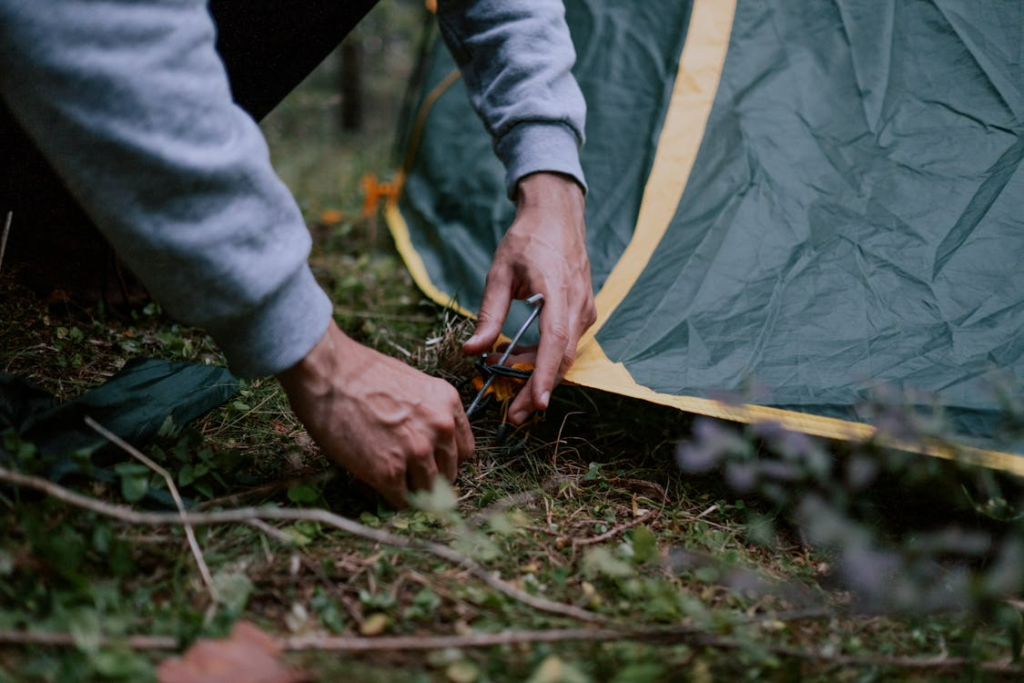
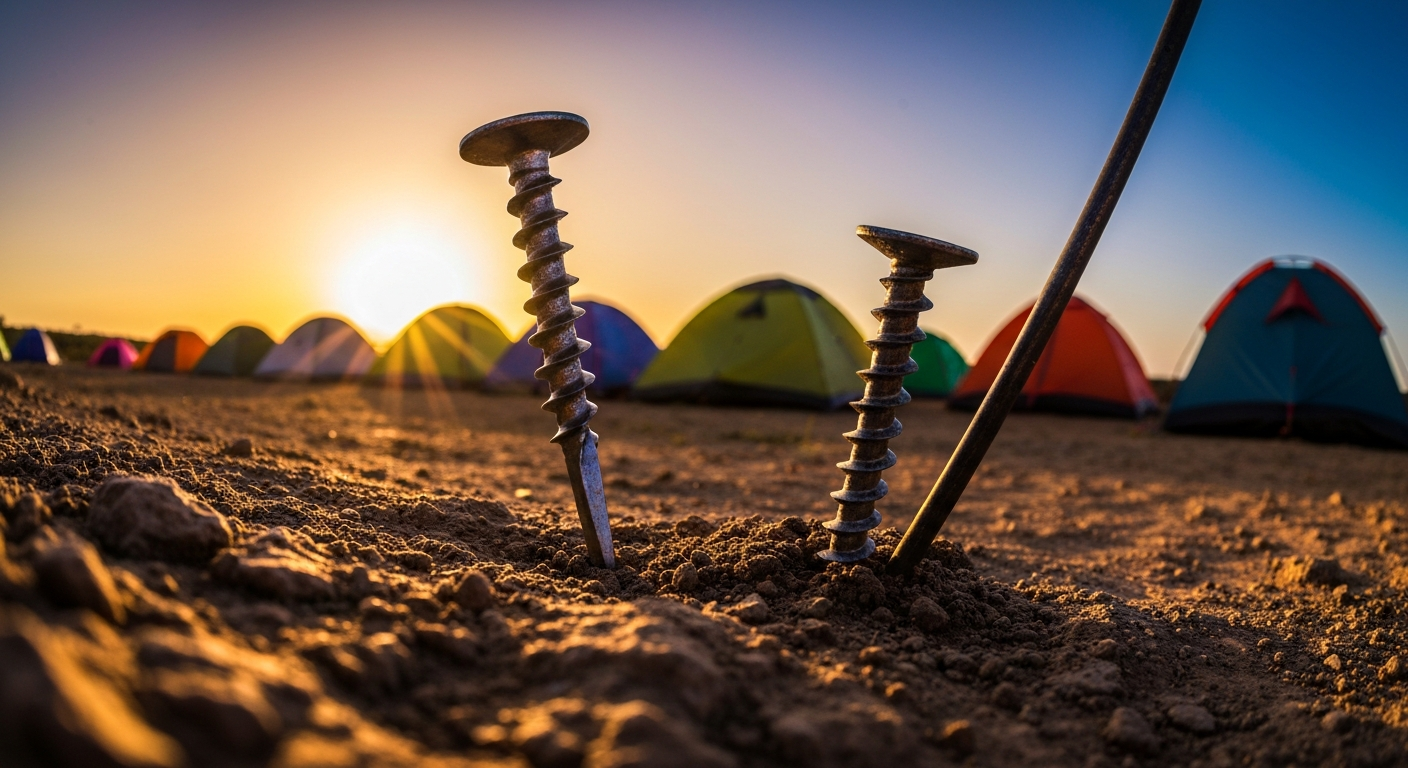
Screw-in tent pegs for camping have a threaded design that grips the ground for a stronger hold than traditional pegs. This design keeps them anchored in different soil types and resists pulling out, even in tough conditions. Made of steel, they provide reliable stability on both hard and loose ground. Here’s what sets them apart and the common types available.
What Makes Screw-In Tent Pegs Different from Traditional Pegs
Traditional tent pegs rely on friction and are often ineffective in hard or soft soil, coming loose in windy conditions. Screw-in pegs, with their threaded design, grip the ground securely and are easier to install using a power tool or hand brace. For most camping situations, especially tough terrain, screw-in pegs offer stronger and more reliable anchoring for tents, awnings, or shelters.
Common Types and Materials of Screw-In Tent Pegs
Screw-in tent pegs come in steel or plastic, each suited to different conditions.
Steel pegs are strong and durable—ideal for hard or rocky ground and compatible with power tools. High-end options like Ground Grabba offer lasting performance.
Plastic sand pegs are lighter and made for loose surfaces like sand or snow. Quality varies; premium brands like Peggy Peg outperform cheap alternatives.
Quick comparison:
| Material | Best Use Case | Key Features |
| Stainless Steel | Hard, rocky, mixed ground | Extremely durable, corrosion-resistant, tool-friendly |
| Plastic | Sand, loose soil, snow | Lightweight, bright colors, wide threads for grip |
Key Benefits of Using Screw-In Tent Pegs
Switching to screw-in tent pegs delivers better holding power and increased shelter stability. Your tent stays anchored—even in harsh weather—so you can camp worry-free. Let’s look at how these pegs ensure secure hold and lasting durability.
Superior Holding Power in Various Terrains
Screw-in tent pegs perform well in all ground types. Their threaded design boosts grip, resisting upward and sideways forces. In rocky terrain, they anchor securely between rocks where regular pegs fail. In soft ground or sand, their wide flutes compact soil for a firm hold.
This versatility means one peg works for any condition—hard dirt or loose sand—keeping your shelter secure wherever you camp.
Enhanced Durability and Longevity
Investing in quality camping gear means expecting it to last. Screw-in pegs made from heat-treated carbon steel or stainless steel are far more durable than standard pegs, which often bend on rocks. These steel pegs withstand heavy use and significant force.
Can you use screw-in tent pegs in extreme weather? Absolutely—they hold firm in high winds and heavy rain. Many top brands even offer lifetime warranties, underscoring their durability.
While pricier upfront than cheap plastic or metal pegs, these last much longer and save you money over time by avoiding frequent replacements. Their reliability makes them a smart, long-term addition to your camping kit.
Factors to Consider When Choosing Screw-In Tent Pegs
Choosing the right screw-in tent pegs improves your camping experience. Not all ground anchors are equal; your best option depends on soil conditions, shelter size, and weight.
By considering these factors, you can select the most suitable tent peg type. Matching pegs to both the ground and your gear ensures a secure, easy setup. Next, we’ll cover how to match peg size to your needs and what to consider for weight.
Matching Peg Length and Size to Your Camping Needs
To choose the right screw-in tent peg length, consider the ground type and what you’re securing. Use longer pegs for soft or loose soil; shorter pegs for hard, compact ground.
Peg design is important: wide flutes grip soft soil better, while sharp tips penetrate tough surfaces. Choose based on your typical camping environment.
Guidelines:
- Large tents/awnings: Use long, heavy-duty pegs for stability and wind resistance.
- Soft ground (sand/loose soil): Choose long pegs with wide flutes.
- Hard/rocky ground: Use short, sturdy steel pegs for easier installation.
Weight Considerations for Backpackers and Caravan Campers
The weight of your camping gear matters, but its importance varies by camping style.
Backpackers should balance weight and strength—bring a few sturdy steel pegs for key spots and lighter ones elsewhere. Caravan campers need heavy-duty steel pegs to secure large awnings, especially in strong winds. General campers can mix peg sizes for versatility without adding bulk.
Summary:
- Backpackers: Use lightweight pegs, with a few strong steel ones for critical areas.
- Caravan Campers: Prioritize heavy-duty steel pegs for maximum security.
- General Campers: Combine different peg sizes for flexibility and minimal weight.
Performance in Different Ground and Weather Conditions
A tent peg’s true test is in tough conditions. On sand or rock, you need anchors that hold firm. Screw-in tent pegs outperform traditional ones, providing a reliable grip on various terrains.
From soft sand and mud to hard-packed earth, the right screw-in peg keeps your tent secure—even in wind. Here’s how they perform across different ground types.
Effectiveness in Sand, Loose Soil, and Mud
Screw-in tent pegs work especially well in soft ground like sand and mud. Their wide, deep threads grip loose soil better than smooth stakes by anchoring as they twist in. For beaches or wet soil, use sand-specific pegs with extra-wide flutes—often plastic—for maximum hold. In mixed conditions, steel screw-in pegs with aggressive threads also perform well. This design helps prevent pullout, a common problem with traditional pegs in soft ground.
Suitability on Hard, Rocky, or Compact Surfaces
Standard pegs often bend or break in rocky ground. Steel pegs, like Ground Grabba, are essential—they can be driven in with a power drill and penetrate surfaces that hammers can’t.
Do screw-in tent pegs work in tough soils? Yes. Their screw action burrows into compacted earth and around rocks, while the threaded design keeps your tent anchored in strong winds.
Steel screw-in pegs resist bending in rocky terrain, offering durability and reliable holding—so you can camp confidently where others can’t.
Essential Tools and Tips for Installing Screw-In Tent Pegs
Screw-in tent pegs are easy to use, especially with a cordless drill or impact driver. They secure your campsite quickly without a mallet. Proper installation maximizes holding power, and removal is simple with the right tools. Next, we’ll cover installation and safe storage methods.
Manual vs. Power Tool Installation Methods
To install or remove screw-in tent pegs, you have two main options:
- Power Tools: Use a cordless drill or impact driver with a hex socket for fast, easy setup and removal.
- Manual Tools: Use a socket wrench or hand brace if you prefer manual operation or need a backup—still easier than hammering in traditional pegs.
Ensure your pegs have hex heads that fit your tools.
Removing and Storing Screw-In Tent Pegs Safely
Safe removal and storage of tent pegs are just as important as installation. Use the same tools you used to install them—simply reverse your drill or wrench to remove screw-in pegs for a quick pack-up.
After removal, clean off dirt or mud to prevent corrosion and keep them ready for your next trip. Store pegs in a dedicated bag to stay organized and protect other gear from sharp points.
Storage tips:
- Clean Before Storing: Wipe off soil and moisture.
- Use a Durable Bag: Choose canvas or heavy-duty nylon.
- Keep Tools Together: Store your hex socket or hand brace with the pegs, so you’re always prepared.
Compatibility with Various Tents and Awnings
Screw-in tent pegs are versatile and work with most shelters using guy ropes or anchor points. They provide better security than standard pegs, from small tents to large setups and caravan awnings.
Their superior holding power helps your shelter withstand harsh weather, making camping safer and more enjoyable. Here are the best practices for various setups.
Best Practices for Large Tents, Awnings, and Family Setups
For large tents, gazebos, and caravan awnings, security is essential. These structures are prone to wind damage if pegs fail. Use heavy-duty steel screw-in pegs at all major anchor points for maximum stability.
How many do you need for a family tent? Replace every critical peg—main guy ropes and corners—with high-quality screw-in pegs. Use longer pegs for soft ground, and don’t cut corners; extra pegs mean more security.
Firmly anchored shelters give peace of mind. Quality steel pegs are a smart investment for any large camping setup.
Lightweight Options for Solo and Ultralight Camping
Yes, lightweight screw-in tent pegs are available for backpacking. While heavy-duty steel pegs are too heavy, shorter steel options provide a good balance of strength and weight. Many backpackers carry two to four strong, lightweight steel pegs for main anchors and use lighter plastic pegs for softer ground. This hybrid approach gives reliable holding power where needed without extra weight, offering more security than standard aluminum stakes.
Conclusion
Selecting the right screw-in tent pegs enhances your camping experience with better stability and security on any terrain. Knowing their advantages helps you choose the best pegs, whether you need lightweight ones for backpacking or strong support for family trips. Using proper tools and installing them correctly ensures maximum effectiveness. Enjoy camping, and keep your tent secure with quality screw-in pegs!