Grand Canyon travel guide for first-time visitors: what to see, where to stay, and how to plan your first trip
Quick answer: This grand canyon travel guide for first-time visitors starts with one decision: go to the South Rim. Open all year, it has the most viewpoints, shuttles, and lodging, and suits a first trip of two to three days. Arrive early, walk the Rim Trail, and take one short hike below the rim.
The Grand Canyon is 277 miles long, up to 18 miles wide, and about a mile deep. Standing at the edge for the first time, most visitors go quiet — then the practical questions start: which rim, how long, where do I park, and which trail is safe?
Which rim should first-time visitors choose, South Rim or North Rim?
For a first visit, choose the South Rim: open all year, with the most viewpoints, lodging, food, free shuttles, and ranger programs. The North Rim is quieter and cooler, but it is open only seasonally, has far fewer services, and sits about a four to five hour drive from the South Rim.
Grand Canyon West, home of the Skywalk glass bridge, sits on Hualapai tribal land outside the national park and works best as a day trip from Las Vegas.
| Rim | Best for | Open | Services | Getting there |
|---|---|---|---|---|
| South Rim | First-time visitors, classic views, most viewpoints and trails | All year | Lodges, restaurants, visitor centers, free shuttles, ranger programs | Drive from Flagstaff, Williams, or Phoenix |
| North Rim | Quiet trips, cooler temperatures, experienced canyon travelers | Seasonally, roughly mid-May to mid-October | One lodge, a campground, limited food and services | Long drive from Flagstaff or southern Utah |
| Grand Canyon West | Day trip from Las Vegas, Skywalk | All year | Tour facilities, viewpoints, Skywalk | Drive or tour from Las Vegas |
When is the best time to visit the Grand Canyon?
Spring and fall are the best seasons for a first visit. From March to May and September to November, the South Rim is usually mild, the trails are comfortable, and the light is good for photographs. Summer brings heat and storms, winter brings cold and sometimes snow — but the canyon is beautiful in every season, and the South Rim never closes.
Summer is the busiest season, especially around school holidays. Plan outdoor time for the morning and late afternoon, when it is cooler and the light is softer. The inner canyon is much hotter than the rim, so a walk down a trail feels far warmer than one along the rim.
Winter means smaller crowds, easier lodging bookings, and snow on the red rock. Dress in layers and check road and trail conditions before you set out.
How many days do you need at the Grand Canyon?
Two full days is the sweet spot for a first visit. One day covers the main viewpoints and part of the Rim Trail, but it feels rushed, and you will miss sunrise or sunset. Two days lets you see the canyon in different light and take one hike below the rim.
A simple two-day plan: on day one, arrive before midday, visit the Visitor Center, and walk the Rim Trail from Mather Point toward Yavapai Point. On day two, start early with a short hike below the rim, spend midday at the museums and the quieter eastern viewpoints along Desert View Drive, and finish with sunset at Hopi Point on Hermit Road. The guide to trip planning ideas for a stress-free trip covers how to build a multi-day plan without overpacking it.
How do you get to the Grand Canyon and get around once you are there?
Most first-time visitors drive. The South Rim is about 80 miles north of Flagstaff, about 60 miles north of Williams, and roughly a three to four hour drive from Phoenix. Flagstaff is the most practical base outside the park, with the most lodging, food, and fuel. Williams is smaller, closer, and the starting point for the Grand Canyon Railway.
Once you arrive, leave the car parked. Free shuttles run between the visitor center, the village, the main viewpoints, and Hermit Road, where private cars are not allowed for most of the year. Parking near the main viewpoints fills up by late morning in busy seasons, so arrive early, park once, and use the shuttles.
If you would rather not drive, tour operators run day trips from Flagstaff, Williams, and Las Vegas, and the train from Williams avoids the parking worry. A guided option can take the logistics off your plate — the guide to tips for planning a private tour for beginners explains what to look for when you book one. Check current road and shuttle information on the National Park Service website first.
What are the best viewpoints for first-time visitors?
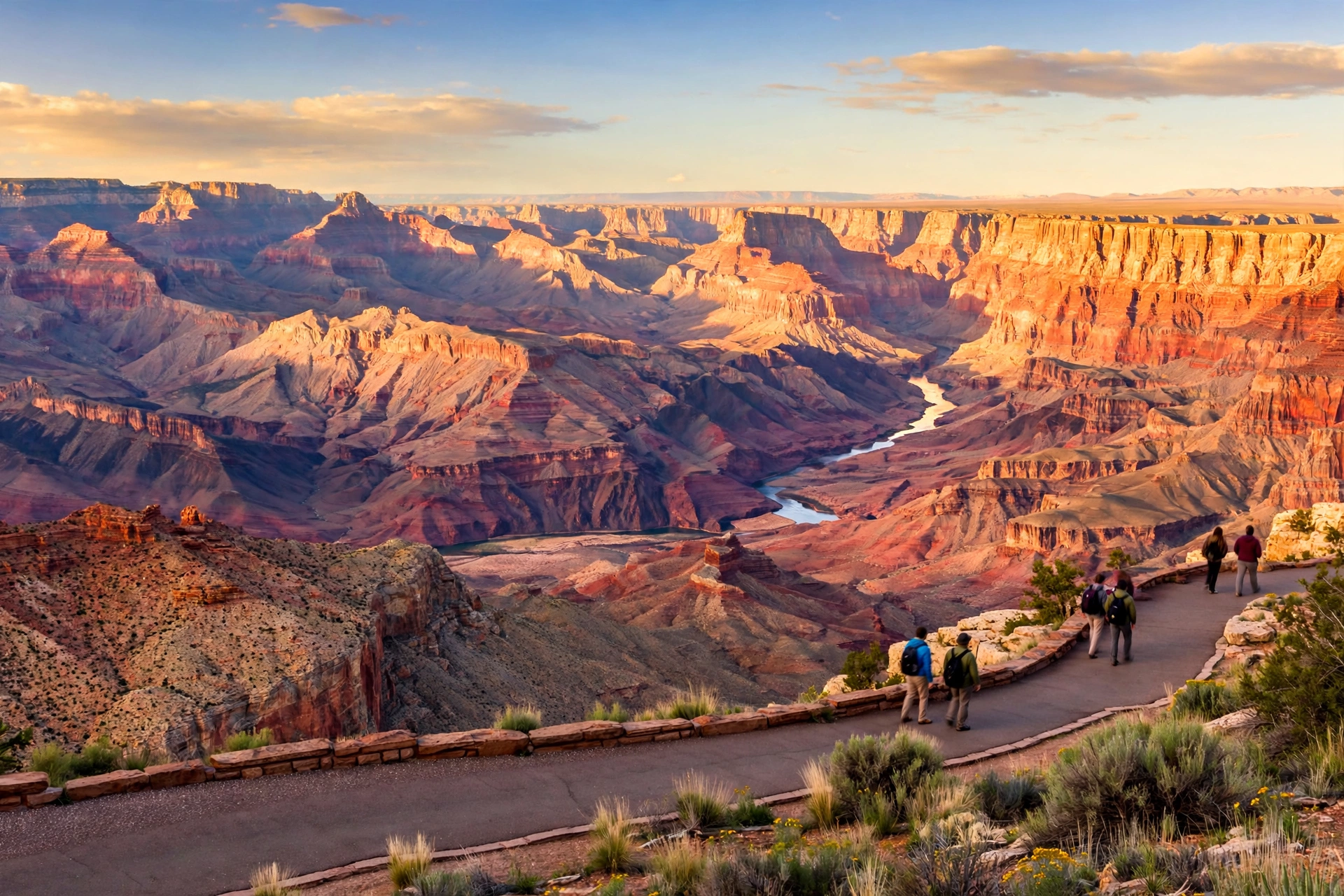
You do not need to see all dozen-plus viewpoints. Mather Point is the classic first stop: a short walk from the visitor center, with a large viewing area and the wide panorama most people picture. Yavapai Point and the nearby Geology Museum explain the rock layers you are looking at.
For sunset, Hopi Point and Mohave Point on Hermit Road are the favorites: they face west, and the low light turns the walls orange and red. Take the shuttle out in the late afternoon and pick a spot early. For sunrise, Mather Point and Yavapai Point are the easiest choices, and arriving before dawn means you will have the rim almost to yourself.
Desert View, at the eastern end of the park, is worth the drive. The historic Watchtower gives you a different angle on the canyon and the river. Lipan Point, on the way there, is one of the best places to see the Colorado River from the rim. Short on time? Focus on Mather, Yavapai, Hopi, and Desert View.
Which hikes are best for first-time visitors?
The Rim Trail is the best first hike: mostly flat, paved in sections, and you can walk as little or as much as you like. It runs about 13 miles along the rim — walk a section between viewpoints, then catch a shuttle back. The stretch from the visitor center to the village is the easiest.
For a taste of hiking below the rim, the Bright Angel Trail is the classic choice. It starts near the village and has water stations and resthouses at intervals. Walk down for an hour or so, then turn back — the climb out takes about twice as long as the walk down. The South Kaibab Trail has steeper, more open views and no water, so it suits a shorter outing: walk down to Ooh Aah Point and come back up.
Do not hike to the river and back in one day on a first visit. It is a very long, strenuous hike that even fit hikers train for, and the most common cause of rescue calls in the park. If you want a bigger adventure later, the ultimate guide to adventure travel covers how to build up to a challenging trip safely.
What should you pack for a day at the Grand Canyon?
Pack for sun, wind, and a temperature change of twenty degrees or more between the rim and the canyon floor. Start with layers: a light base layer, a warm mid-layer, and a windproof outer layer. Wear sturdy shoes with good grip — the trails below the rim are rocky and uneven, and smooth soles slip on loose gravel.
Sun protection matters more than most first-time visitors expect. The air is dry and the elevation is high, so sunburn and dehydration come on faster than at sea level. Bring a hat, sunglasses, and sunscreen, and reapply during the day. Carry more water than you think you need: at least a liter per person for a rim walk, and more below the rim. Add salty snacks and blister care.
A daypack, a phone or camera, and a paper or downloaded offline map round out the kit. Mobile signal is patchy, so do not rely on it for navigation. In winter, add gloves, a warm hat, and traction for icy paths. In summer, add extra water and a plan to be out of the sun at midday.
Where should you stay near the Grand Canyon?
Staying inside the park is the best option if you can get a room. The lodges at the South Rim put you within walking distance of the viewpoints, the trails, and the sunset spots. Rooms book up months ahead, especially in spring and fall, so reserve early.
Tusayan, just outside the South Entrance, is the next best choice, with hotels, restaurants, and shops a few minutes from the park. Flagstaff, about 80 miles south, has the widest choice of lodging and the lowest prices, but it adds an hour and a half of driving each way. Williams is a middle option: smaller and closer than Flagstaff, and a pleasant stop in its own right.
Traveling with family? Think about space and downtime as well as location — the guide to family mountain trips made easy covers planning a mountain stay for different ages and energy levels. For a longer trip, the guide on how to choose the right accommodation for extended stays explains what to check before you book. Campers have two popular campgrounds at the South Rim, so reserve early.
How can you stay safe in the heat, at the edge, and on the trails?
The three risks that matter most are heat, falls, and underestimating the climb out. Heat is the biggest: drink before you feel thirsty, eat salty snacks, rest in the shade, and turn back if you feel dizzy or nauseous. Hike early or late in summer, and never start a long hike down at midday.
Stay behind the railings at viewpoints, and keep a firm grip on children near the edge. Many stretches of rim have no barrier, and the rock near the edge can be loose or crumbly. Do not step onto ledges for photographs or climb over walls for a better angle.
On the trails, every step down must be climbed back up. Start early, carry more water than you think you need, and set a turnaround time — then stick to it. Tell someone your plans if hiking alone, and check trail conditions at the visitor center first. Keep your distance from wildlife, including elk and ravens, and never feed them.
What mistakes do first-time visitors make most often?
The most common mistake is arriving late. Parking fills up, viewpoints get crowded, and the heat builds. Arrive before ten, see the main viewpoints early, and save midday for the visitor center and museums.
The second mistake is hiking too far down. The trail looks easy going down and the views keep getting better, so it is tempting to keep going. The climb back up is longer, steeper, and hotter than it looks. Set a turnaround point in advance and honor it.
The third mistake is carrying too little water — a small bottle is not enough for a desert hike at high elevation, and the dry air hides how much you are sweating. The fourth is skipping the visitor center: the exhibits and a short talk with a ranger make everything you see afterward more interesting. The fifth is forgetting the canyon is remote: fuel up before you arrive and download maps in advance. The same habits apply elsewhere — the guide on what to know before traveling to Pigeon Forge shows how to prepare for a popular gateway town.
Frequently asked questions
Is the South Rim really the best choice for a first visit?
Yes. The South Rim is open all year, with the most viewpoints, lodging, food, and shuttles. The North Rim is quieter and cooler, but open only seasonally with far fewer services.
How much does it cost to enter Grand Canyon National Park?
There is an entrance fee, and the amount depends on how you arrive — by car, on foot, or by bicycle — and on the pass you hold. Check current fees on the National Park Service website before your trip.
Can you see the Grand Canyon in one day?
You can see the main viewpoints and walk part of the Rim Trail in one day. Two full days is better: sunrise and sunset, a short hike below the rim, and the museums without rushing.
Is it safe to hike below the rim on a first visit?
Yes, if you choose a short hike, start early, carry plenty of water, and set a turnaround time. The Bright Angel Trail is best for first-timers, with water stations and resthouses. Do not hike to the river and back in one day.
What is the best time of day to see the Grand Canyon?
Sunrise and sunset. The low light brings out the red, orange, and gold of the rock layers, and viewpoints are quieter. Midday light is flatter and crowds are larger, so use midday for the visitor center and museums.
Do you need a reservation to visit the Grand Canyon?
No reservation is needed just to enter the park, but reserve lodging and campgrounds well in advance, especially in spring, summer, and fall. Check the National Park Service website for current rules before your trip.
A first trip to the Grand Canyon works best when you keep it simple: South Rim, two days, early starts, one short hike below the rim, and sunset from a viewpoint you reached without rushing. Go once, and save the river hike and the North Rim for a second visit.