Wandering Through Timeless Cities Where Craftsmanship Defines Every Street Corner
Some cities impress with skyline views or flashy attractions. Others lure travelers with their rich history, timeless architecture, and unique arts and crafts, embedded into city identity. In such cities, craftsmanship isn’t hidden behind museum glass. It lives in plazas, staircases, facades, fountains, workshops, and homes.
Across Europe, North Africa, and the Middle East, generations of artisans shaped urban landscapes long before modern tourism existed. In many historic centers, visitors still walk the same stone lanes laid centuries ago, passing decorative details created by stonemasons, ceramicists, woodworkers, and metal artisans whose techniques were handed down over hundreds of years.
For travelers who love architecture and design, these destinations offer something more meaningful than sightseeing. They reveal how creativity can define the identity of an entire city, or even country.
Rome: A Living Gallery of Stone and Skill
Rome is often associated with emperors and ruins, but the city’s true magic is in the craftsmanship hidden between famous landmarks. Beyond the Colosseum and Vatican, churches, piazzas, and palazzos display extraordinary stone inlay, carved marble, and detailed floorwork.
Some of the finest ancient mosaics survive in Roman religious buildings, where tiny pieces of colored glass and stone still shimmer after more than a thousand years. These works were not merely decorative: they communicated stories, status, and spiritual symbolism in an era when many people could not read.
Rome is also a masterclass in urban continuity. More than 900 churches remain in the city, many preserving artisanal details from different centuries. It is one of the few places where you can see Classical, Renaissance, Baroque, and modern design layered within a single neighborhood.
Seville: The City of Pattern and Light
Seville is a city where craftsmanship sets the whole atmosphere. The city’s warm climate encouraged the use of tiled courtyards, shaded arcades, and ornate interiors designed to cool homes while adding beauty. The result is a city where decorative surfaces are part of everyday life.
The Alcázar of Seville is among Spain’s greatest examples of artisan mastery, blending Islamic geometry, carved plasterwork, timber ceilings, and ceramic decoration. Even outside major landmarks, apartment entrances and neighborhood squares often feature patterned tiles and hand-finished ironwork.
Spain remains one of Europe’s leading ceramic producers, and Andalusia has long been central to that story. In Seville, travelers can still find workshops where techniques dating back centuries continue with surprising precision.
Marrakech: Craftsmanship as a Way of Life
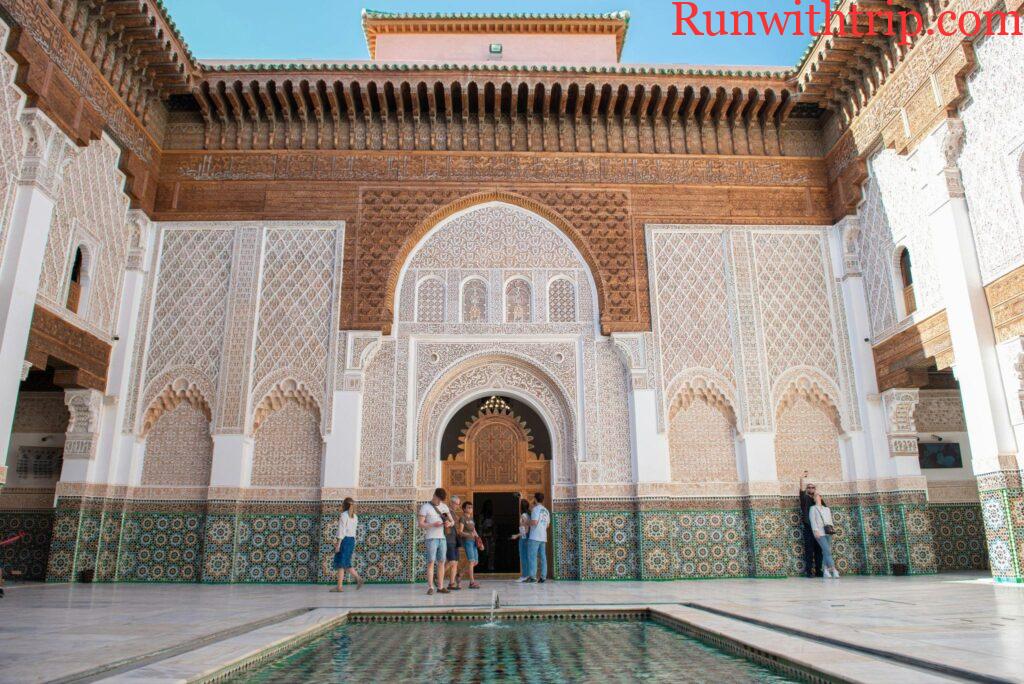
Marrakech engages every sense, and much of that energy comes from making things by hand. In the medina, artisans shape wood, hammer brass, dye textiles, and cut tile with remarkable speed and accuracy. UNESCO recognized the medina of Marrakech as a World Heritage Site in 1985, but its greatest treasure may be the living skills practiced within it.
Traditional riads demonstrate how craftsmanship shaped domestic architecture. Many feature central courtyards, carved cedar details, decorative plaster, and intricate surface work designed to reflect light and create privacy.
Unlike many other cities, Marrakech still functions through its craft economy. Workshops are not performances for tourists. They are active businesses serving homes, hotels, mosques, and restaurants across Morocco and beyond.
Venice: Beauty Built on Water
Venice is synonymous with beauty, romance, and design. Building a city on more than 100 small islands required engineering brilliance, but maintaining beauty across centuries required craftsmanship of the highest order.
Palaces lining the Grand Canal feature Gothic tracery, sculpted stone balconies, and facades that once signaled wealth through imported materials. Inside churches and civic buildings, marble mosaics added color and movement in a damp environment where painted surfaces could be more vulnerable.
Venetian glassmaking also transformed global decorative arts. Murano artisans became so valuable in the Middle Ages that the industry was concentrated on nearby islands, where furnaces reduced fire risk and protected trade secrets.
Istanbul: Where Continents and Styles Converge
Few cities display cultural exchange as vividly as Istanbul. Positioned between Europe and Asia, it became a meeting point for Byzantine, Ottoman, and later influences. That history appears in domes, markets, fountains, baths, and homes across the city.
The Grand Bazaar, with roots in the 15th century, remains one of the world’s oldest and largest covered markets, containing thousands of shops. Beyond shopping, it offers a close look at metalwork, textiles, ceramics, and woodworking traditions that helped define the city’s visual identity.
In historic mosques and palaces, travelers see how craftsmanship served both beauty and function. Decorative elements often improved acoustics, controlled light, or guided movement through space.