What Happens Inside a Vacuum Packing Bag
Take your jacket and pack it in a vacuum travel bag, zip it up, affix the little pump, and press the button. The jacket shrinks down in a few seconds to become a thin, tight slab compressed in the bag. It seems like a trick, but it is just physics.
As soon as you learn the functionality of vacuum travel bag technology, you’ll never pack the same way again.
Why Your Clothes Take Up So Much Space
The fibers of fleece, wool, cotton, or down contain air with minute gaps. Even fluffy jackets can contain up to 70% air. No wonder your suitcase gets so full so soon; you’re putting air in it, not just clothes.
That trapped air is removed by using a vacuum compression bag. Here’s how it works:
Step 1: The pump withdraws the air from the bag.
Put a hand pump, vacuum cleaner, or an electric pump on the bag’s valve. When pumping occurs, there is a one-way valve through which the air can escape but cannot go back in. This effectively reduces the air pressure inside the bag, allowing it to compress. At sea level, atmospheric pressure measures 101.3 kPa. These vacuum packing systems reduce air pressure even further.
Step 2: The atmospheric change does the heavy lifting.
You are not expected to squeeze the air out of the clothes yourself; the change in atmosphere inside the bag does it for you. Once a pressure drop has occurred in the bag, the off-loading air remains at high pressure. That contrast forms an overpowering force that drives the walls of the bag inward. The bag becomes more confined, the layers of fabrics are clamped to each other, and the rest of the air is pressed out of all holes, weaves, and fibers. And that’s how your jacket flattens in just a few seconds.
Step 3: It is all fixed in place with the valve.
As your pump shuts off, the one-way valve automatically closes, trapping the low pressure inside. Only the external environment is what prevents the bag from growing bulky, and provided the seal is not broken, you will have your clothes packed flat as a pancake for hours on end.
Bonus Benefit: Moisture and Dust Insurance
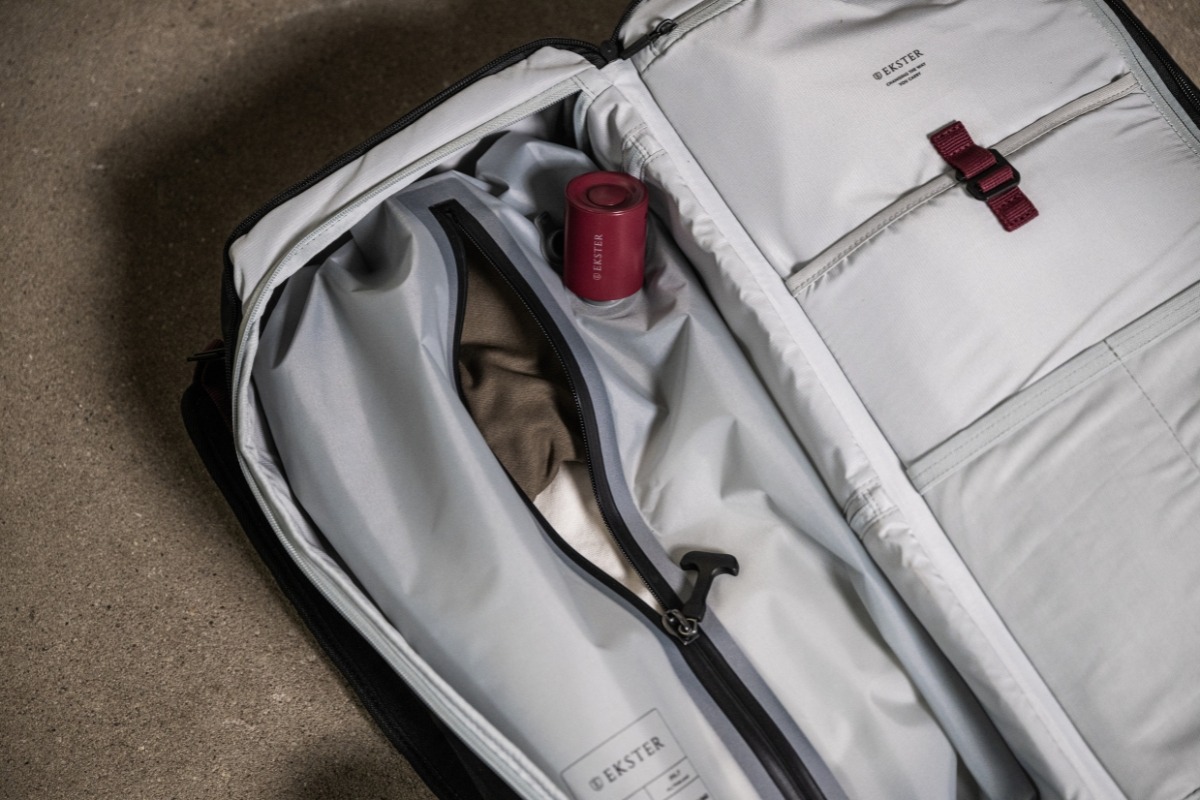
Premium vacuum compression bags like Ekster’s TravelPack Vacuum Bag are waterproof and odor-proof. They prevent the formation of mold or mildew while keeping all moisture out. This airless space also keeps dust, pollen, pet dander, and, to a large extent, indoor smells from penetrating the bag. Consequently, your clothes remain compact, clean, and fresh.
Will Compression Damage Your Clothes?
Will compressing your clothes hurt them? Answer: No, for the majority of clothing. Cotton, synthetics, and knitwear fully recover when the bag opens, and air comes in. It may take a minute or two for fabrics like down or wool to puff up to their natural state again, but they won’t be damaged.
Be careful when vacuum packing blazers, suits, and delicate fabrics. More so to avoid creasing than causing damage. Make sure not to catch any fabrics in the zipper when closing the bag.
How Much Space Do Vacuum Bags Save?
A bulky winter jacket that normally takes up half a suitcase can compress down to roughly the size of a folded T-shirt when packed in a vacuum bag. For frequent travelers, that often means fitting nearly twice as many clothes into a single carry-on.
That kind of space-saving can completely change the way you pack. Suddenly, a carry-on can handle a long-haul trip or a family vacation without the stress of airline baggage restrictions.
Best Clothes to Pack in a Vacuum Bag
Vacuum bags work best with bulky items that trap a lot of air, such as winter jackets, hoodies, sweaters, blankets, and towels. Because these fabrics contain more air, they compress the most dramatically.
Everyday clothing like T-shirts and jeans can still benefit from compression, but the difference is usually less dramatic.
A good rule of thumb: pack your heaviest and bulkiest items first. Once the air is removed, you’ll instantly see how much extra space opens up in your suitcase.
Conclusion
Vacuum packing bags work by removing the air trapped between clothing fibers. With the air gone, clothes take up 50–60% less space while staying protected from moisture, dust, and odors.
The result? A suitcase that fits more, stays organized, and makes traveling far easier.
So the next time you pump a vacuum bag flat, you’ll know exactly what’s happening inside, and why it makes such a difference.